August 25, 2026
Salesforce CRM Best Practices: 20 Tips for Better Results
Salesforce CRM Best Practices: A Practical Guide for B...
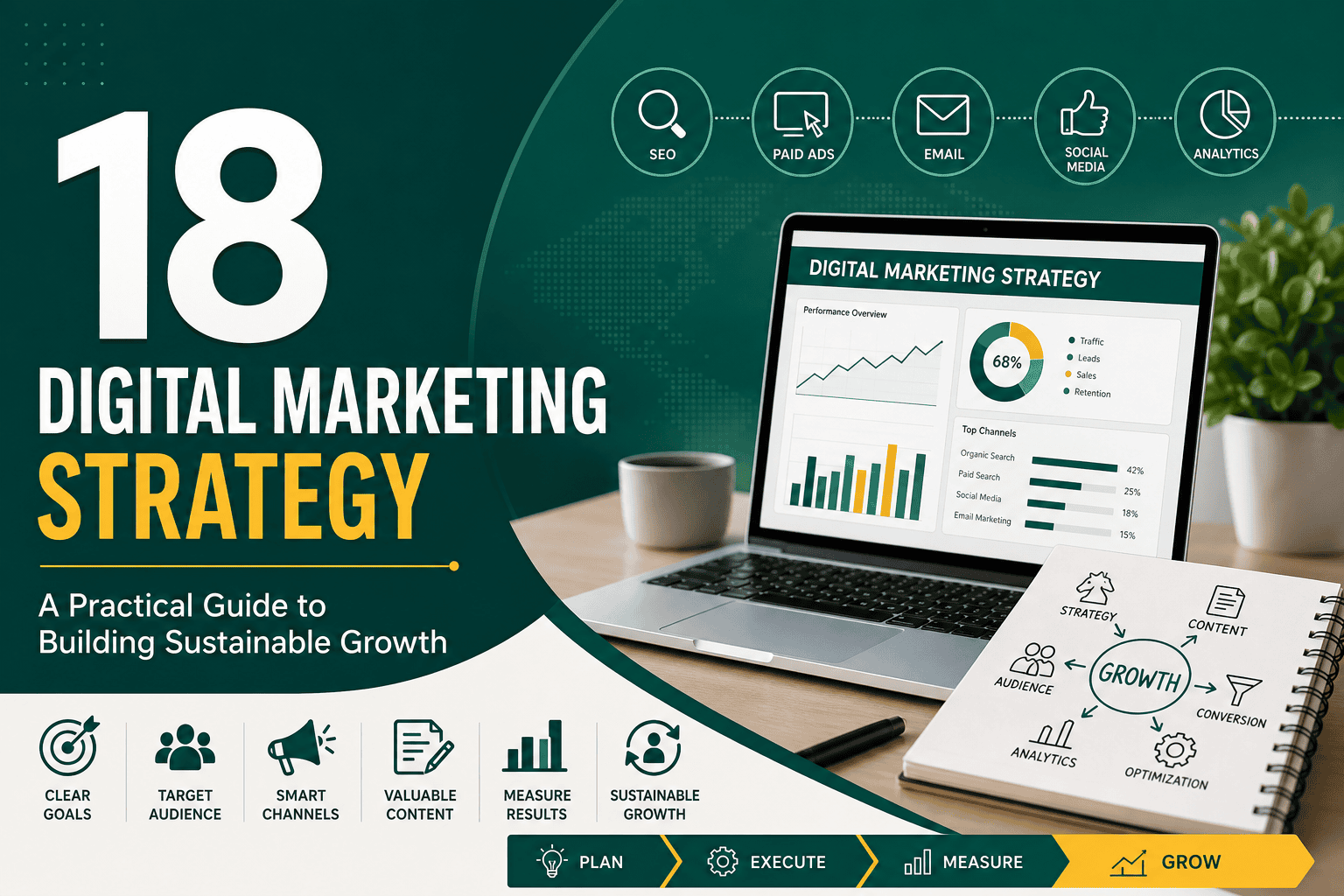
A strong digital marketing strategy is the structured plan a business uses to attract, engage, convert, and retain customers through online channels. It connects your business goals with the right audience, messaging, platforms, content, advertising, analytics, and technology so that marketing activity becomes measurable and repeatable instead of random.
Without a clear strategy, digital marketing can quickly become a collection of disconnected tactics: posting on social media, running ads, sending emails, publishing blogs, or redesigning a website without knowing how each activity supports revenue. A good digital marketing strategy helps you decide where to focus, what to measure, how to allocate budget, and how to improve performance over time.
A digital marketing strategy is a long-term plan for using digital channels to achieve specific business objectives. These objectives may include increasing brand awareness, generating leads, improving online sales, reducing customer acquisition cost, strengthening customer loyalty, or expanding into new markets.
The strategy should define who you want to reach, what problems you solve for them, which channels you will use, what content and offers you will create, how you will measure success, and how your marketing efforts will connect to sales and customer service.
Digital marketing gives businesses access to powerful tools, but tools alone do not create growth. A strategy ensures that your website, content, SEO, paid advertising, email campaigns, social media, CRM, and analytics work together toward the same commercial goals.
A clear digital marketing strategy helps you:
Every digital marketing strategy should begin with clear business goals. These goals guide your channel selection, budget, content plan, and measurement framework. For example, a startup may focus on awareness and lead generation, while an established ecommerce brand may prioritize customer retention and repeat purchases.
Useful goals are specific, measurable, and tied to business outcomes. Instead of saying “increase traffic,” a stronger goal would be “increase qualified organic traffic by 40% in 12 months and convert 3% of visitors into leads.”
Your strategy should define who your ideal customers are, what they care about, where they spend time online, and what motivates them to buy. This often includes demographic details, industry, job role, pain points, buying triggers, objections, and preferred communication channels.
The more accurately you understand your audience, the easier it becomes to create relevant content, choose the right platforms, and design offers that solve real problems.
Positioning explains why your product or service is different and why customers should choose you. Messaging turns that positioning into clear communication across your website, ads, emails, social posts, and sales materials.
Strong messaging should answer three questions:
Your website is often the center of your digital marketing strategy. Search campaigns, social media ads, email marketing, and organic content usually send users back to your site. If the website is slow, confusing, insecure, or poorly structured, marketing performance will suffer.
Technical foundations such as speed, uptime, security, mobile responsiveness, and scalability are essential. If your business uses WordPress, choosing the right infrastructure can directly affect SEO and conversion performance. A helpful starting point is this WordPress hosting guide for choosing the right website hosting, which explains how hosting impacts speed, security, and search visibility.
A digital marketing strategy should define which channels you will use and why. Common channels include search engine optimization, paid search, paid social, organic social media, email marketing, content marketing, affiliate marketing, influencer partnerships, webinars, and online communities.
The best channels depend on your audience, budget, buying cycle, competition, and business model. A B2B software company may rely on SEO, LinkedIn, webinars, and CRM-based nurturing. A local service business may prioritize local SEO, Google Ads, reviews, and retargeting. An ecommerce brand may focus on paid social, email automation, SEO, and conversion rate optimization.
Start by reviewing your existing digital assets and performance. This includes your website, analytics, SEO rankings, content library, paid campaigns, social media profiles, email lists, conversion rates, CRM data, and customer feedback.
Your audit should identify what is working, what is underperforming, and where opportunities exist. For example, you may discover that your blog attracts traffic but does not convert, your ads generate leads but at a high cost, or your website has strong content but poor technical performance.
The customer journey describes how people move from problem awareness to purchase and retention. A typical journey includes awareness, consideration, decision, onboarding, loyalty, and advocacy.
Your digital marketing strategy should map content, campaigns, and touchpoints to each stage. For example, educational blog posts may support awareness, comparison pages may support consideration, product demos may support decision-making, and email sequences may support retention.
Do not choose channels just because they are popular. Choose them because they match your audience behavior and business objectives. If your customers actively search for solutions, SEO and paid search may be important. If visual discovery drives demand, platforms such as Instagram, TikTok, Pinterest, or YouTube may be more relevant. If your sales cycle is long, email and CRM nurturing may be essential.
Paid social can be especially powerful when supported by strong targeting, creative testing, and performance measurement. If Meta platforms are part of your plan, this guide to Meta Ads reporting and campaign performance analysis explains how tracking and reporting help improve advertising decisions.
Content is the fuel of digital marketing. It supports SEO, social media, email nurturing, lead generation, sales enablement, and customer education. A content strategy should define the topics, formats, publishing schedule, search intent, distribution channels, and conversion goals for your content.
Content formats may include:
The strongest content strategies are based on customer questions, search demand, sales objections, and business priorities. Every content asset should have a purpose, whether that purpose is ranking in search, building trust, generating leads, or helping close sales.
A digital marketing strategy is only effective if you can measure it. Your measurement framework should connect marketing activity to business outcomes. This means tracking more than impressions, likes, or traffic. You should also monitor qualified leads, conversion rates, cost per acquisition, customer lifetime value, revenue, and retention.
Important digital marketing metrics include:
Digital marketing does not end when a lead is generated. To turn interest into revenue, marketing and sales need shared definitions, consistent follow-up processes, and visibility into customer interactions. This is where a CRM becomes important.
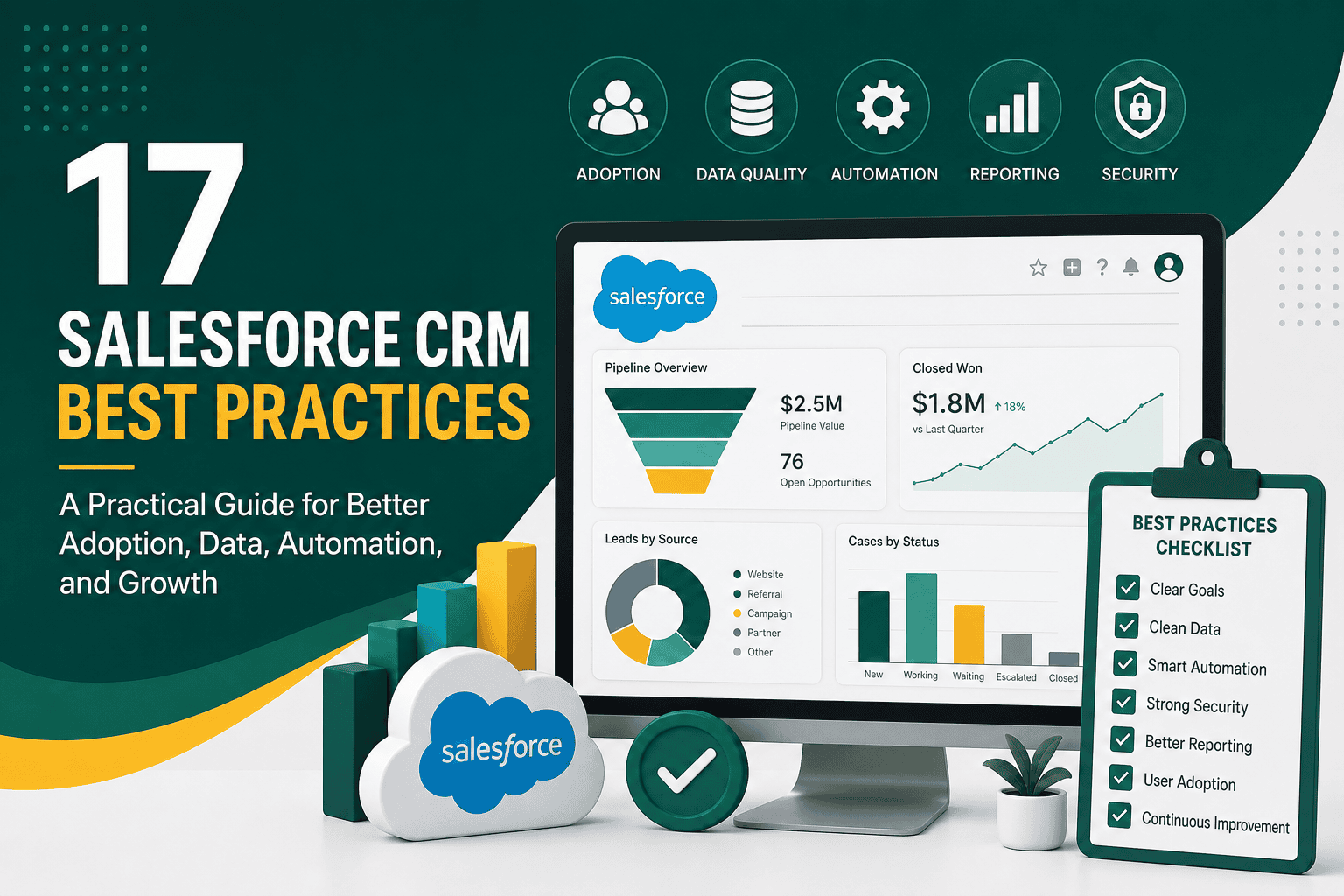
A CRM helps businesses centralize customer data, track sales activity, automate follow-ups, and measure the full path from first touch to closed deal. For organizations comparing CRM options, this article on why businesses choose Salesforce CRM explains how centralized customer information, automation, analytics, and integrations can support better marketing and sales alignment.
Search engine optimization is a long-term digital marketing channel focused on improving visibility in organic search results. SEO helps attract users who are actively searching for information, products, services, comparisons, and solutions.
An effective SEO strategy includes:
SEO is especially valuable because it can reduce long-term dependency on paid advertising. However, it requires consistency, patience, and a commitment to publishing useful content that satisfies user intent.
Paid advertising can accelerate visibility, traffic, and lead generation. Common paid channels include Google Ads, Meta Ads, LinkedIn Ads, TikTok Ads, YouTube Ads, display advertising, and programmatic campaigns.
Paid media works best when it is connected to strong landing pages, clear offers, accurate tracking, audience segmentation, and continuous testing. The goal is not just to spend more, but to improve campaign efficiency through better targeting, creative, bidding, and conversion optimization.
Email remains one of the most effective digital marketing channels because it allows direct communication with people who have already shown interest in your business. Email marketing can be used for lead nurturing, onboarding, promotions, product education, customer retention, and reactivation campaigns.
Automation makes email more powerful by delivering the right message at the right time. Examples include welcome sequences, abandoned cart emails, lead nurturing workflows, post-purchase follow-ups, renewal reminders, and customer satisfaction surveys.
Social media can support awareness, trust, community building, customer service, and demand generation. However, not every business needs to be active on every platform. A focused social media strategy should identify where your audience is most engaged and what type of content performs best there.
Some brands use social media mainly for education and credibility. Others use it for entertainment, influencer partnerships, paid campaigns, customer support, or community engagement. The right approach depends on your audience and brand personality.
Conversion rate optimization, or CRO, focuses on improving the percentage of visitors who take a desired action. This action may be making a purchase, filling out a form, booking a consultation, downloading a guide, or starting a free trial.
CRO can include improving page speed, simplifying forms, strengthening calls to action, improving copy, adding testimonials, testing landing page layouts, reducing checkout friction, and personalizing offers.
Even small conversion improvements can significantly increase marketing profitability because they help you get more value from existing traffic.
Your digital marketing budget should reflect your goals, growth stage, competition, and available resources. A new business may need to invest heavily in brand awareness, website development, SEO foundations, and initial paid campaigns. A mature business may focus more on scaling proven channels and improving customer retention.
Budget categories may include:
A good budget should leave room for testing. Not every campaign will work immediately, so experimentation is necessary to identify the best-performing messages, audiences, and channels.
Many businesses struggle with digital marketing because they move quickly into tactics without building the strategic foundation. Avoiding common mistakes can save time and budget.
Consider a B2B consulting company that wants to generate more qualified leads. Its digital marketing strategy might include:
This strategy connects awareness, traffic, lead capture, nurturing, and sales follow-up into one system.
Your digital marketing strategy should be reviewed regularly, but not changed randomly. Campaign performance may be reviewed weekly or monthly, while the broader strategy may be reviewed quarterly. Annual planning can help set larger goals, budgets, and market priorities.
During each review, evaluate what is working, what has changed in the market, which channels are improving, which campaigns are underperforming, and whether your messaging still matches customer needs.
A successful digital marketing strategy is not just a list of channels. It is a complete growth system that connects business goals, audience insights, messaging, website performance, content, advertising, CRM, analytics, and continuous optimization.
The best strategies are focused, measurable, and flexible. Start with clear goals, understand your audience, build a strong website and tracking foundation, choose the right channels, create valuable content, and use data to improve over time. When each part of your digital marketing strategy works together, your business can attract better traffic, generate stronger leads, and build more sustainable growth.