July 14, 2026
Meta Ads Reporting: Measure, Analyze & Improve Campaigns
Meta Ads Reporting: How to Measure, Analyze, and Impro...
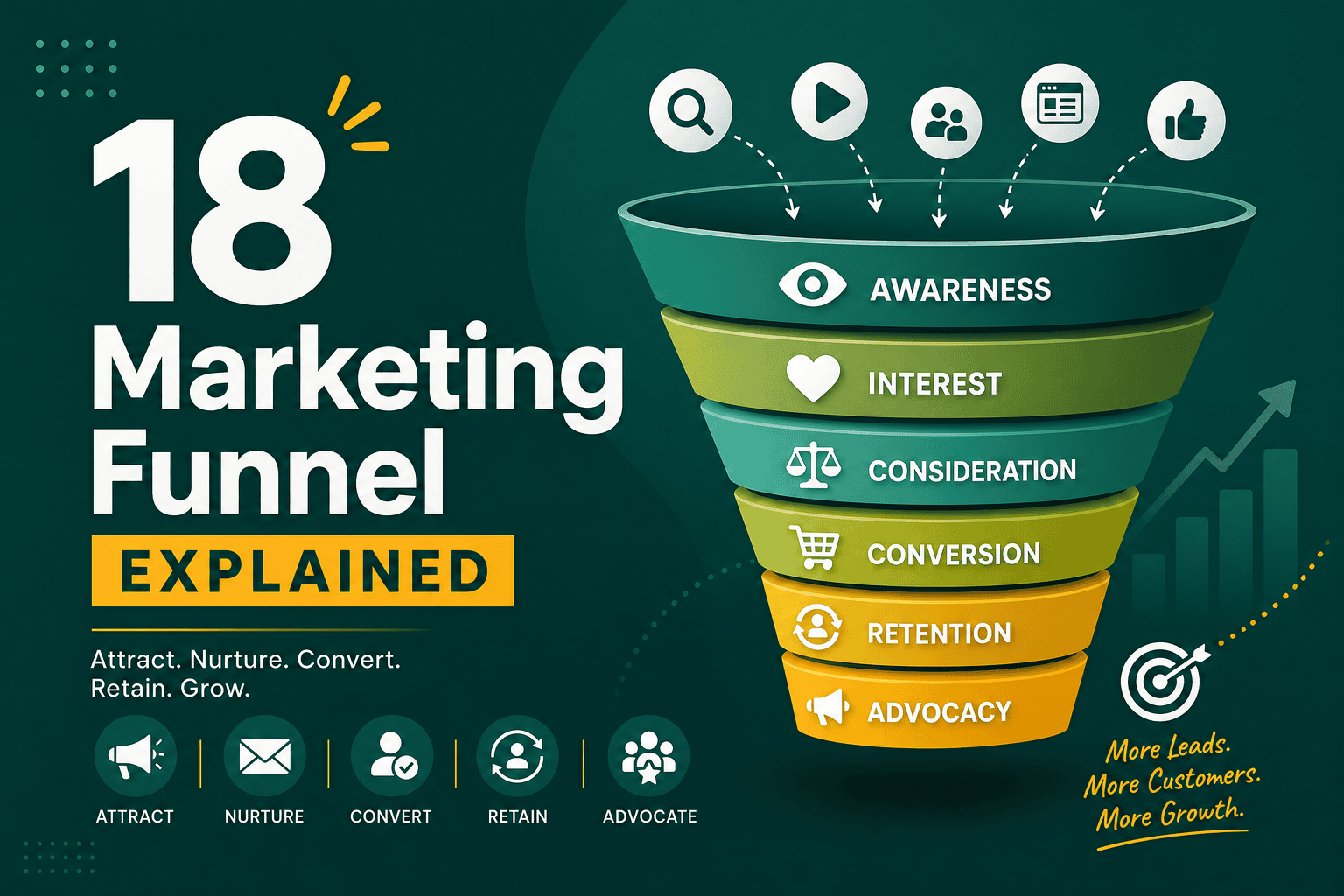
If you have ever wondered how someone goes from hearing about a business for the first time to becoming a paying customer, the answer often comes down to the marketing funnel. This guide has the marketing funnel explained in practical terms so business owners, marketers, sales teams, and founders can understand how to attract prospects, build trust, generate leads, convert sales, and create repeat customers.
A marketing funnel is the journey people take from initial awareness to final purchase and beyond. It helps you organize your marketing around different stages of customer intent instead of treating every visitor, lead, or prospect the same way. Someone who has never heard of your brand needs different messaging than someone comparing prices, requesting a quote, or deciding whether to buy again.
When built properly, a marketing funnel connects your website, content, advertising, email marketing, CRM, sales process, analytics, and customer experience into one clear system. Instead of relying on random campaigns, you create a structured path that moves people toward a business goal.
A marketing funnel is a framework that describes the stages a potential customer goes through before making a purchase. It is called a funnel because many people may become aware of your business at the top, fewer will show serious interest in the middle, and an even smaller number will become customers at the bottom.
The most common marketing funnel stages are:
Different businesses may use different names for these stages, but the core idea is the same: your marketing should match the customer’s level of awareness, trust, and readiness to act.
A marketing funnel matters because most customers do not buy immediately after seeing one ad or visiting one page. They often need multiple interactions before they trust your business enough to take action. Without a funnel, businesses may spend money generating traffic but fail to nurture visitors, capture leads, follow up effectively, or measure what actually drives revenue.
A clear marketing funnel helps you:
If your business is building a broader growth plan, your funnel should be part of a structured digital marketing strategy that connects your goals, audience, channels, content, analytics, and technology.
The awareness stage is the top of the funnel. At this point, people may not know your business exists. They may also be unaware of the exact problem they need to solve. Your goal is not always to sell immediately. Instead, the goal is to get in front of the right audience and introduce your brand in a useful, relevant way.
Common awareness-stage channels include:
At this stage, your content should answer broad questions, explain problems, introduce solutions, and help people understand why change may be needed. Examples include beginner guides, educational videos, industry insights, tips, checklists, and problem-focused content.
In the interest stage, people have moved beyond simple awareness. They are paying closer attention. They may visit your website, follow your social profiles, sign up for a newsletter, download a resource, or engage with multiple pieces of content.
Your goal is to deepen trust and make your business memorable. Instead of pushing only sales messages, provide helpful information that proves your expertise. This is where consistent content, email marketing, remarketing, and lead magnets can become valuable.
Examples of interest-stage assets include:
The consideration stage is where prospects actively evaluate whether your product or service is the right fit. They may be comparing your business with competitors, checking pricing, reading reviews, asking questions, or discussing options internally.
At this stage, your marketing should help people make a confident decision. You need to reduce uncertainty, answer objections, and demonstrate why your solution is worth choosing.
Strong consideration-stage content includes:
This is also where lead quality becomes important. Not every website visitor or subscriber is ready to buy. A strong lead generation strategy helps you attract better-fit prospects, capture their information, and move them toward the right next step.
The conversion stage is the bottom of the funnel. This is where a prospect takes the action your business wants. Depending on your model, that action could be making a purchase, booking a call, requesting a quote, starting a free trial, submitting a form, calling your team, or subscribing to a paid product.
At this stage, friction matters. Even interested prospects can abandon the process if your offer is unclear, your website is slow, your forms are too long, your pricing is confusing, or your checkout process feels risky.
To improve conversions, focus on:
Conversion tracking is essential at this stage. If you run paid advertising, tools such as Google Ads conversion tracking help you understand which campaigns, keywords, ads, and landing pages are producing valuable actions instead of only clicks.
The funnel does not end when someone becomes a customer. Retention is the stage where you keep customers engaged, satisfied, and willing to buy again. For many businesses, increasing retention is more profitable than constantly acquiring new customers.
Retention marketing may include:
A customer relationship management system can help track customer activity, follow-ups, opportunities, support requests, and long-term value. If you are new to CRM, this practical guide to what CRM is and how it works explains how businesses use CRM systems to manage relationships across the entire customer journey.
The advocacy stage is where happy customers help bring in new customers. They may refer friends, recommend your business to colleagues, leave positive reviews, share your content, or provide testimonials and case studies.
Advocacy is powerful because people often trust recommendations from real customers more than brand advertising. A strong customer experience turns your funnel into a growth loop, where customers do not only buy but also help attract future prospects.
Advocacy tactics include:
The marketing funnel and sales funnel are closely related, but they are not exactly the same. The marketing funnel usually focuses on attracting, educating, nurturing, and converting prospects through campaigns, content, advertising, and digital experiences. The sales funnel focuses more on the direct sales process, including lead qualification, discovery calls, proposals, negotiations, and closing deals.
In many businesses, the two funnels overlap. Marketing may generate leads and nurture them until they are ready for sales. Sales may then continue the process through consultation, objection handling, and deal closure. After the sale, marketing, customer success, and support may work together to encourage retention and referrals.
The best businesses do not treat marketing and sales as separate silos. They define shared stages, agree on what makes a qualified lead, use common reporting, and create a smooth handoff between teams.
Top-of-funnel marketing focuses on awareness. People at this stage may not be ready to buy, but they are discovering problems, asking questions, or exploring ideas. Your goal is to get attention from the right audience and provide value.
Top-of-funnel examples include:
Middle-of-funnel marketing focuses on interest and consideration. Prospects know they have a need and are exploring possible solutions. Your job is to build trust, collect leads, and show why your solution fits their needs.
Middle-of-funnel examples include:
Bottom-of-funnel marketing focuses on conversion. Prospects are closer to making a decision, so your content and offers should make it easy to act.
Bottom-of-funnel examples include:
Start by deciding what the funnel should achieve. Different goals require different funnel designs. An ecommerce store may want online purchases. A service business may want booked consultations. A SaaS company may want free trial signups. A local business may want phone calls or appointment requests.
Common funnel goals include:
A funnel only works if it is built around the right audience. You need to know who your ideal customers are, what problems they face, what triggers their buying journey, what objections they have, and what information they need before making a decision.
Useful audience questions include:
Map the steps a person takes from first discovering your business to becoming a customer. This helps you identify the content, offers, ads, emails, landing pages, and follow-up actions needed at each stage.
A simple customer journey map may look like this:
One of the biggest funnel mistakes is using the same content for every stage. Awareness-stage prospects often need education. Consideration-stage prospects need proof. Conversion-stage prospects need clarity and reassurance.
Plan content around intent:
Your funnel needs traffic. The best channel depends on your audience, offer, budget, and timeline. Search traffic is strong when people are actively looking for solutions. Social platforms can be effective for demand generation, retargeting, and visual storytelling. Email is strong for nurturing. Paid ads can accelerate testing and growth.
If you are deciding where to invest advertising budget, this comparison of Google Ads vs Facebook Ads explains how search-based intent and social discovery work differently inside a marketing funnel.
Most visitors will not buy on their first visit. Lead capture gives you a way to continue the conversation. Depending on your business, you may capture leads through forms, newsletter signups, gated guides, quizzes, quote requests, webinar registrations, free trials, or consultation bookings.
Good lead capture offers are specific, relevant, and valuable. A generic newsletter signup may not perform as well as a useful checklist, calculator, report, template, or personalized consultation.
Lead nurturing is the process of building trust after someone enters your funnel. This often happens through email sequences, remarketing ads, sales follow-ups, educational content, and personalized recommendations.
Effective nurturing should:
A funnel should not be built once and ignored. You need to measure each stage to see where people enter, engage, drop off, convert, and return. The goal is to find bottlenecks and improve them over time.
Important funnel metrics include:
Dashboards can make funnel performance easier to review across marketing, sales, and customer data. A well-designed CRM dashboard can help teams monitor leads, opportunities, pipeline value, conversion rates, and follow-up activity in one place.
Here is a simple example of a marketing funnel for a B2B service business:
This example is simple, but it shows how the funnel connects content, lead capture, email nurturing, sales conversations, customer success, and referrals.
Some businesses push a sales message before the audience understands the problem or trusts the brand. This can work for high-intent traffic, but it often fails with colder audiences. Match your message to the stage of awareness.
High traffic does not always mean a healthy funnel. If visitors are not a good fit, they will not convert into qualified leads or customers. Focus on audience quality, not only volume.
Many businesses create awareness content and bottom-of-funnel sales pages but neglect the middle. Prospects often need comparison content, case studies, answers, and proof before they are ready to act.
A lead is only valuable if someone follows up properly. Slow responses, generic emails, missing reminders, and disconnected sales processes can cause good opportunities to go cold.
Without tracking, you may not know which channels generate revenue and which only generate clicks. Proper analytics, conversion tracking, CRM data, and reporting are essential for funnel optimization.
A funnel is not a one-time project. It should be tested, measured, and improved continuously. Small improvements in landing pages, forms, emails, offers, and sales follow-up can create significant gains over time.
If you already have a funnel but results are inconsistent, start by auditing each stage. Look for friction, weak messaging, poor targeting, missing content, and tracking gaps.
Use this checklist:
Improvement usually comes from removing bottlenecks. For example, if you have traffic but few leads, improve your landing page and offer. If you have leads but few sales calls, improve follow-up and qualification. If you have customers but low retention, improve onboarding, customer success, and ongoing communication.
The right funnel metrics depend on your business model, but most companies should track performance across acquisition, engagement, conversion, sales, and retention.
A marketing funnel gives structure to how your business attracts, educates, converts, and retains customers. Instead of treating every prospect the same, it helps you deliver the right message at the right stage of the customer journey.
When the marketing funnel is explained simply, it is not just a diagram. It is a practical growth system. At the top, you attract the right people. In the middle, you build trust and guide their decision. At the bottom, you make conversion easy. After the sale, you continue creating value so customers return, refer others, and become long-term advocates.
The strongest funnels are built with clear goals, relevant content, accurate tracking, consistent follow-up, and ongoing optimization. Whether you run a local business, ecommerce store, B2B service company, SaaS product, or consultancy, a well-designed marketing funnel can help turn scattered marketing activity into a predictable path toward growth.