July 12, 2026
Salesforce Sandbox Guide: Types, Best Practices & Setup
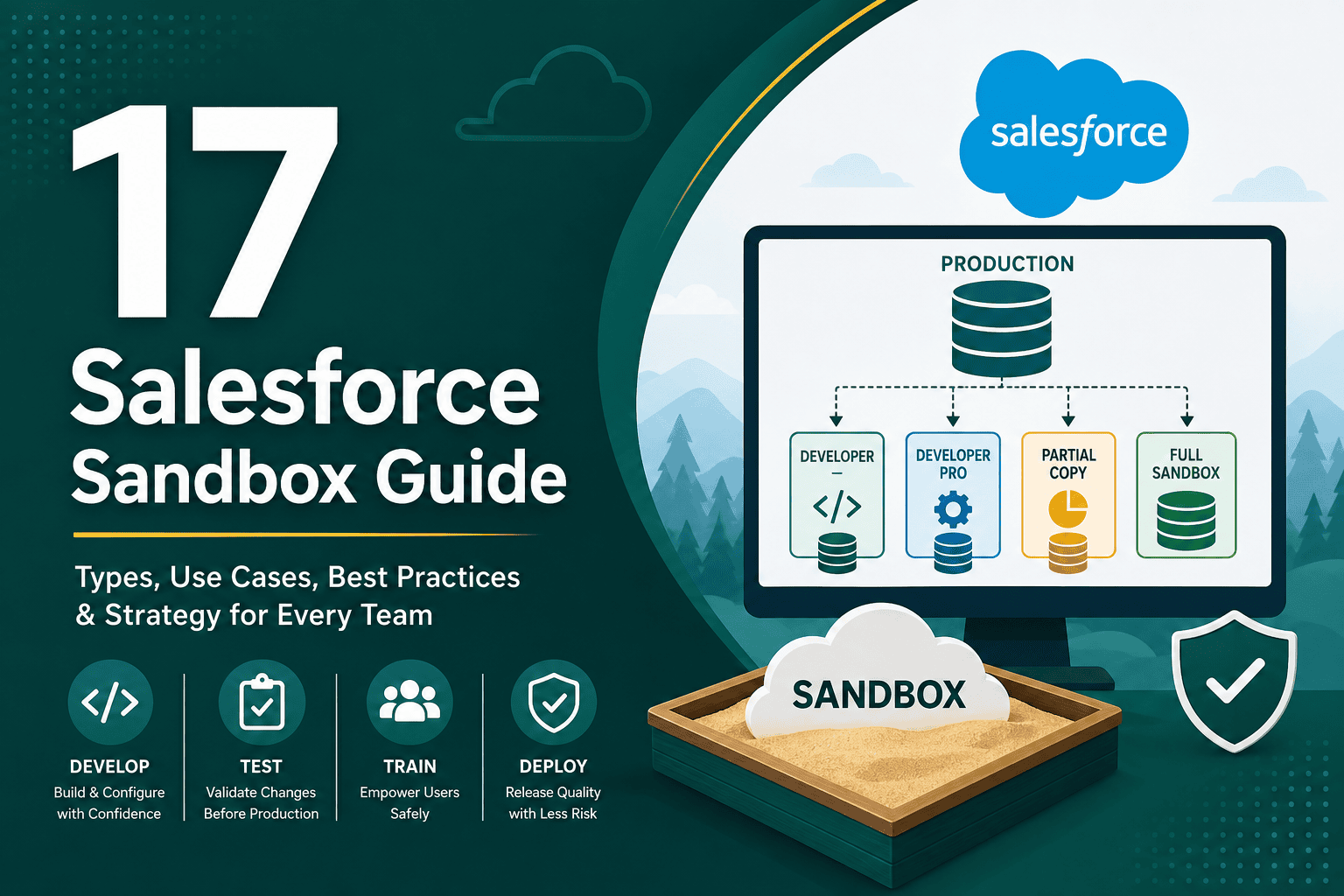
Salesforce Sandbox Guide A Salesforce sandbox is a sep...
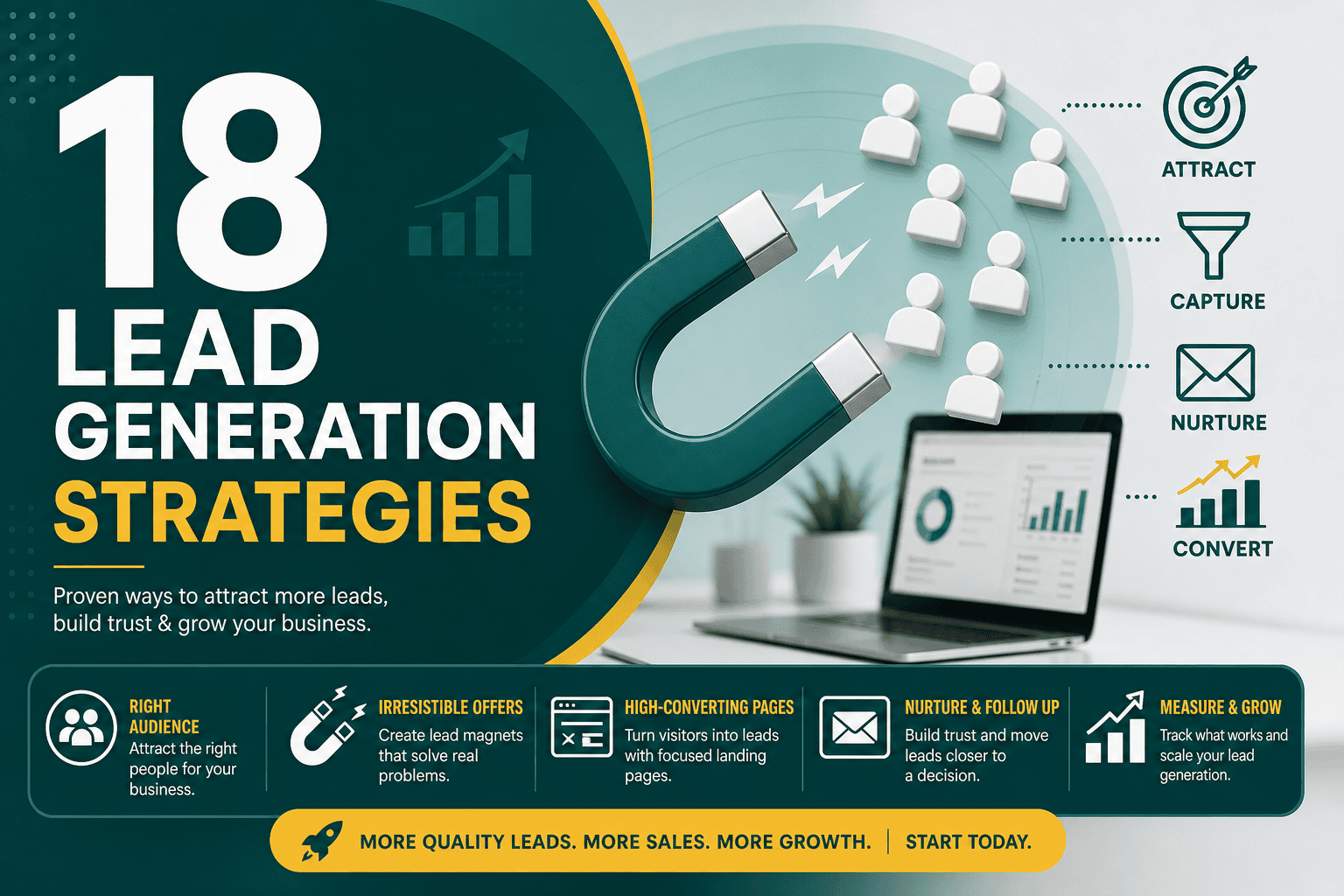
Lead generation strategies are the methods businesses use to attract potential customers, capture their contact information, qualify their interest, and move them toward a sale. Whether you run a B2B service company, local business, ecommerce brand, SaaS product, consultancy, or agency, consistent lead generation is essential for predictable growth.
Good lead generation is not only about getting more names into a database. The real goal is to attract the right people, understand their needs, build trust, and create a clear path from first interaction to sales conversation. A strong lead generation system combines positioning, content, paid advertising, search visibility, landing pages, tracking, CRM processes, automation, and sales follow-up.
Lead generation is the process of attracting potential customers and encouraging them to share their information or take an action that shows interest in your business. A lead might submit a contact form, request a quote, download a guide, book a consultation, call your business, sign up for a webinar, start a free trial, or subscribe to your email list.
Leads are usually not all equal. Some are ready to buy immediately, while others are only researching. Effective lead generation strategies help you identify where each person is in the buying journey and respond with the right message, offer, and follow-up process.
Without a clear lead generation strategy, businesses often depend on inconsistent referrals, random social media posting, or advertising campaigns that are difficult to measure. This creates unstable revenue and makes growth unpredictable.
Strong lead generation strategies help businesses:
Lead generation works best when it is part of a broader marketing plan. If you need to organize your channels, messaging, offers, and measurement, a strong digital marketing strategy for growth gives your lead generation efforts a clearer structure.
Inbound lead generation attracts people who are already searching for answers, comparing options, or looking for solutions. Common inbound channels include SEO, blog content, organic social media, YouTube, webinars, downloadable resources, email marketing, and referral traffic.
Inbound leads often convert well because the prospect has shown active interest. However, inbound strategies usually take time to build, especially SEO and content marketing.
Outbound lead generation involves proactively reaching potential customers instead of waiting for them to find you. Common outbound channels include cold email, LinkedIn outreach, cold calling, direct mail, event networking, and account-based marketing.
Outbound can produce results faster, but it requires precise targeting, strong messaging, compliance awareness, and careful follow-up to avoid wasting time on poor-fit prospects.
Paid lead generation uses advertising platforms to reach potential customers quickly. Google Ads, Meta Ads, LinkedIn Ads, YouTube Ads, and display campaigns can all generate leads when they are supported by strong offers, landing pages, and conversion tracking.
Paid channels are powerful because they can scale, but they can also waste budget quickly if targeting, messaging, landing pages, and tracking are not managed properly.
Referral lead generation comes from customers, partners, affiliates, industry contacts, and professional networks. Referrals often close at a higher rate because trust is transferred from the referrer to your business.
The best referral strategies are not passive. They include structured referral requests, partner programs, customer success processes, testimonials, case studies, and incentives where appropriate.
One of the most important lead generation strategies is knowing exactly who you want to attract. If your targeting is too broad, your campaigns may generate volume but not quality. A clear ideal customer profile helps you focus your messaging, offers, channels, and sales process.
Your ideal customer profile should define:
For example, a CRM consultant might target growing service businesses with messy spreadsheets, poor follow-up, and no visibility into sales performance. A web design agency might target ecommerce brands with slow websites and low conversion rates. The more specific the audience, the easier it becomes to create a compelling offer.
A lead magnet is something valuable you offer in exchange for a prospect’s contact information. It gives people a reason to take action before they are ready to buy. A good lead magnet solves a specific problem, saves time, educates the buyer, or helps them make a better decision.
Examples of lead magnets include:
The most effective lead magnets are closely related to your paid offer. If your business sells CRM implementation, a CRM readiness checklist is more useful than a generic business productivity guide. If you sell financial consulting, a cash flow forecasting template may attract better prospects than a broad newsletter signup.
A landing page is a focused page designed to convert visitors into leads. Unlike a homepage, which may have many navigation options, a landing page should guide the visitor toward one primary action.
A strong landing page usually includes:
Keep lead forms as short as possible while still collecting the information your sales team needs. For a low-commitment offer, name and email may be enough. For a consultation request, you may need phone number, company name, website, budget range, and project details.
Search engine optimization can become one of the most profitable long-term lead generation strategies because it captures people who are already looking for solutions. Unlike interruption-based advertising, SEO matches your business with existing demand.
Lead-generating SEO content can include:
For example, a business selling accounting software might create content around “best accounting software for small businesses,” “how to automate invoicing,” and “cash flow management tips.” Each article should guide readers toward a relevant next step, such as downloading a guide, booking a demo, or requesting advice.
Google Ads can be highly effective for lead generation because it reaches people at the moment they are searching for a product, service, or solution. Search campaigns are especially useful for urgent needs, local services, B2B research, professional services, and high-intent commercial keywords.
Successful Google Ads lead generation depends on:
If your business wants to capture people actively searching for solutions, a well-structured search campaign that converts can be one of the fastest ways to generate qualified leads.
Meta Ads, which include Facebook and Instagram advertising, are useful for reaching people based on interests, behaviors, demographics, engagement, website activity, and lookalike audiences. Unlike Google Search, people on Meta platforms are not always actively searching. This means your offer and creative must quickly capture attention.
Meta lead generation campaigns often work well for:
Audience quality matters. Instead of only targeting broad interests, use custom audiences, website retargeting, customer lists, and lookalike audiences where appropriate. A dedicated Meta audience targeting strategy can help your campaigns reach people who are more likely to engage and convert.
Many businesses ask whether Google Ads or Facebook Ads is better for lead generation. The answer depends on demand, audience behavior, offer type, budget, and sales cycle.
Google Ads is often stronger when people already know they need a solution and are searching for it. Facebook and Instagram Ads are often stronger when you need to create demand, educate the market, or reach people before they actively search.
For many businesses, the best approach is to use both platforms strategically. Google Ads can capture existing demand, while Meta Ads can build awareness, promote lead magnets, retarget website visitors, and nurture prospects. If you are deciding where to invest first, this comparison of Google Ads vs Facebook Ads for your business can help clarify the strengths of each platform.
Traffic alone does not create leads. Your website must make it easy for visitors to understand your value, trust your business, and take action. Many businesses already have enough traffic to generate more leads, but their website is unclear, slow, hard to navigate, or missing strong calls to action.
To improve website lead generation, review the following areas:
Conversion improvements can have a major impact. If a landing page currently converts 2% of visitors into leads and you improve it to 4%, you double lead volume without increasing advertising spend.
A call to action tells prospects what to do next. Weak calls to action create hesitation. Strong calls to action reduce friction and make the next step obvious.
Examples of lead-focused calls to action include:
Use calls to action that match the buyer’s stage. A first-time visitor reading an educational article may not be ready to request a sales call, but they might download a guide. A visitor on a pricing page may be ready to book a demo or ask for a quote.
Live chat and chatbots can improve lead generation by helping visitors get answers quickly. Many prospects leave a website because they cannot find pricing, availability, service details, or the right next step. Chat tools can reduce that friction.
Effective chat workflows can:
However, chat should not feel intrusive. Avoid aggressive popups that block content immediately. Make the experience helpful, simple, and aligned with the visitor’s intent.
Not every lead is ready to buy immediately. Email marketing helps you stay in touch, educate prospects, build trust, and move people closer to a decision. This is especially important for B2B, high-ticket services, SaaS, consulting, education, and complex purchases.
Lead nurturing emails can include:
A good nurture sequence should not only sell. It should help prospects understand their problem, evaluate solutions, avoid mistakes, and see why your business is a strong fit.
Generating a lead is only the beginning. If leads are not followed up quickly and consistently, marketing spend is wasted. A CRM helps your team organize lead data, track conversations, assign ownership, automate reminders, and measure pipeline performance.
A strong CRM lead management process should include:
If your team is still managing leads through spreadsheets, inboxes, or scattered notes, understanding what CRM is and how it works is an important step toward improving lead follow-up and sales visibility.
Automation helps businesses respond faster and reduce manual work. When a lead fills out a form, automation can notify the right salesperson, add the contact to a CRM, send a confirmation email, assign a follow-up task, and place the lead into the correct nurture sequence.
Useful lead generation automations include:
Automation should support human follow-up, not replace it entirely. For high-value leads, speed and personalization still matter. Practical CRM automation ideas can help your team save time while creating a more consistent lead management process.
Most website visitors do not convert on their first visit. Retargeting allows you to show ads to people who visited your website, viewed a service page, engaged with your content, watched a video, or opened a lead form but did not submit it.
Retargeting campaigns can promote:
Retargeting works best when messages match the visitor’s previous behavior. Someone who viewed a pricing page may need a sales-focused offer. Someone who read a beginner guide may need more education before speaking with sales.
Prospects want evidence that your business can deliver results. Case studies, testimonials, reviews, client logos, industry awards, and before-and-after examples help reduce perceived risk.
A strong case study should explain:
Use specific numbers where possible. “Increased qualified leads by 46% in four months” is stronger than “helped improve lead generation.” Specific proof makes your marketing more believable.
Free audits, consultations, and assessments can generate high-intent leads when they are positioned correctly. They work especially well for service businesses because they give prospects a clear reason to start a conversation.
Examples include:
To avoid attracting unqualified leads, explain who the audit is for and what the prospect will receive. You can also add qualification questions to your form, such as monthly budget, company size, project timeline, or current challenge.
Partnerships can become a powerful lead source when two businesses serve the same audience but do not directly compete. For example, a web development agency might partner with a branding studio, SEO consultant, CRM expert, or copywriter. A real estate agent might partner with mortgage brokers, moving companies, and interior designers.
Good partnership lead generation requires:
The best partnerships are built around customer value first. If the referral helps the customer solve a real problem, the partnership is more likely to last.
Webinars are effective for lead generation because they combine education, trust-building, and direct engagement. They are especially useful for complex products, B2B services, software, coaching, consulting, and industries where buyers need education before making a decision.
Effective webinar topics usually promise a specific outcome, such as:
After the webinar, follow up with attendees and no-shows separately. Attendees may be ready for a consultation, while no-shows may need a replay, summary, or additional educational content.
One of the biggest lead generation mistakes is measuring only lead volume. A campaign that generates 200 low-quality leads may be worse than a campaign that generates 30 qualified opportunities. You need to track not only where leads come from, but also which sources produce revenue.
Important lead generation metrics include:
Tracking should connect your website analytics, ad platforms, CRM, and sales reporting. Without that connection, marketing teams may optimize for cheap leads while sales teams struggle with poor-quality prospects.
Lead generation works best when marketing and sales agree on what a qualified lead looks like. If marketing focuses on volume and sales focuses on quality, teams may work against each other.
Marketing and sales should define:
Regular feedback between sales and marketing helps improve ad targeting, content topics, landing pages, lead magnets, and qualification criteria.
Many businesses struggle with lead generation because they focus on tactics before fixing the foundation. Avoid these common mistakes:
Fixing these basics often improves results faster than launching another campaign. Lead generation is a system, not a single tactic.
B2B service companies often benefit from SEO, LinkedIn outreach, webinars, case studies, referral partnerships, Google Ads, and CRM-based follow-up. Since sales cycles may be longer, lead nurturing is especially important.
Local businesses should focus on local SEO, Google Business Profile optimization, Google Ads, review generation, location pages, referral programs, and simple quote request forms.
Ecommerce lead generation often focuses on email list growth, discount offers, product quizzes, abandoned cart campaigns, retargeting, social ads, and content that helps shoppers choose the right product.
SaaS lead generation commonly uses free trials, demos, comparison pages, product-led content, webinars, retargeting, email nurturing, and paid search campaigns targeting high-intent keywords.
Consultants and coaches often generate leads through thought leadership, webinars, free assessments, LinkedIn content, email newsletters, testimonials, podcasts, and targeted paid campaigns.
To create a practical lead generation plan, follow these steps:
Start focused. It is usually better to execute two channels well than to run six channels poorly. Once you have a repeatable process, you can expand into additional channels.
The best lead generation strategies are built around quality, relevance, trust, and follow-up. More traffic is useful only if your website converts, your offer is clear, your tracking is accurate, and your sales process turns interest into revenue.
Start by defining your ideal customer, creating a strong offer, and choosing the channels most likely to reach buyers at the right moment. Then improve your landing pages, tracking, CRM process, and lead nurturing. When these parts work together, lead generation becomes less random and more predictable.
A successful lead generation system does not depend on one tactic. It combines strategy, execution, measurement, and continuous improvement so your business can attract better prospects and turn more of them into customers.