October 27, 2026
Display Campaign Guide: How to Build, Target, and Optimize Ads
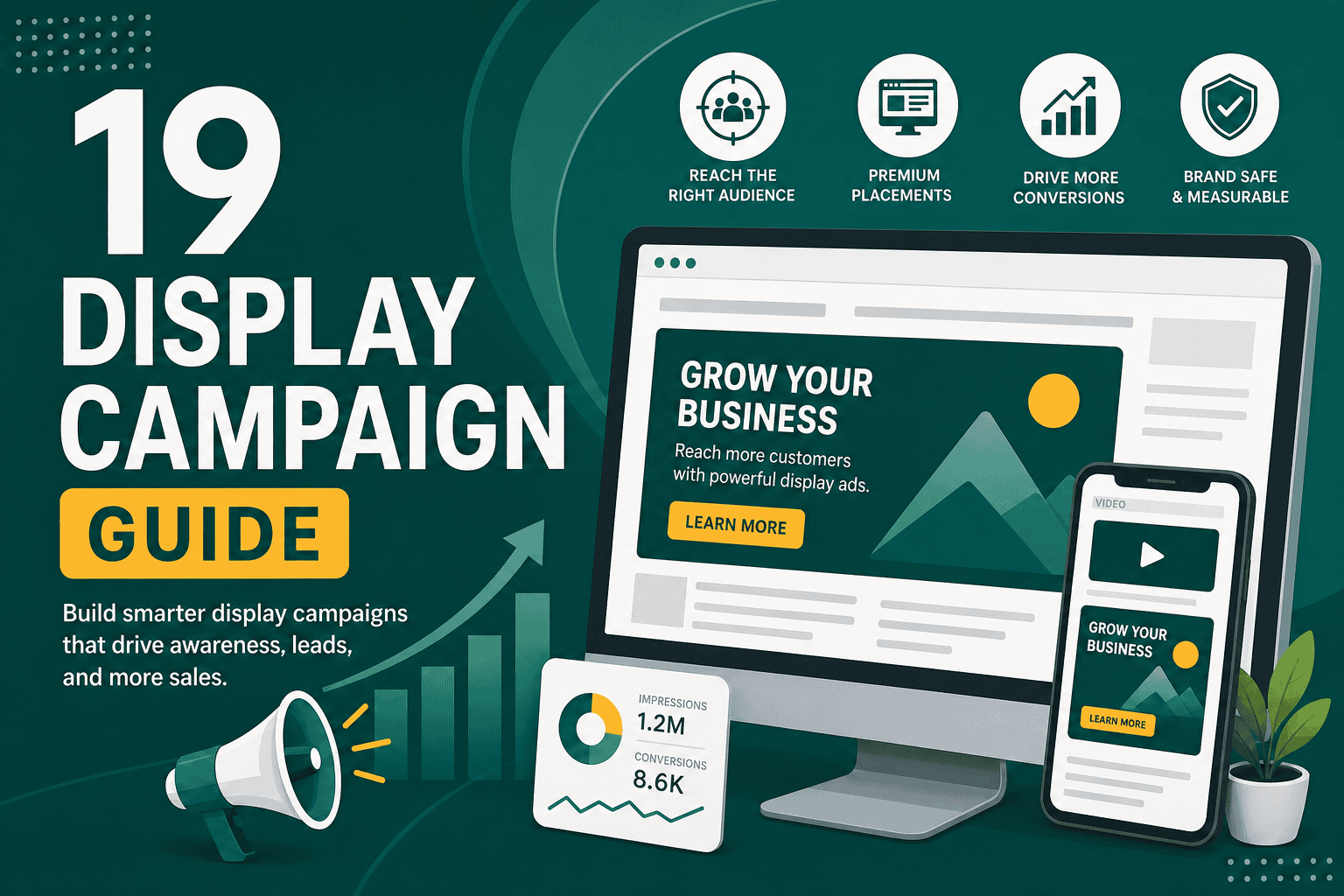
Display Campaign Guide This display campaign guide exp...

CRM trends are changing quickly as businesses look for better ways to manage customer relationships, automate work, improve sales performance, and deliver more personalized experiences. A customer relationship management system is no longer just a contact database. Modern CRM platforms are becoming central business systems that connect sales, marketing, customer service, operations, analytics, automation, and artificial intelligence.
For many companies, CRM is now the foundation of customer experience. It helps teams understand who customers are, what they need, where they are in the buying journey, and how the business should respond. As technology improves and customer expectations rise, organizations need to keep up with the most important CRM trends to stay competitive.
This guide explains the biggest CRM trends shaping business growth, customer service, sales operations, marketing automation, data management, and digital transformation.
One of the most important CRM trends is the rapid growth of artificial intelligence inside CRM platforms. AI is no longer limited to large enterprise systems. It is increasingly available in mainstream CRM tools for sales forecasting, lead scoring, customer segmentation, content suggestions, workflow recommendations, and support automation.
AI can help teams identify which leads are most likely to convert, recommend the next best action, summarize customer interactions, detect churn risks, and generate follow-up emails. Instead of forcing teams to manually review every record, AI can surface the most important insights at the right time.
However, AI is only as useful as the data behind it. Businesses with poor CRM data, inconsistent fields, duplicate records, or unclear processes may not see strong results. Before adopting advanced AI features, companies should improve data quality, standardize workflows, and define what success looks like.
Automation continues to be one of the strongest CRM trends because it saves time, reduces errors, and makes customer follow-up more consistent. Instead of asking employees to manually update records, assign leads, send reminders, or create tasks, CRM automation can handle repetitive steps automatically.
Sales teams use automation to assign leads, create follow-up tasks, move deals through pipeline stages, and notify managers when opportunities stall. Marketing teams use automation to send nurture emails, segment contacts, trigger campaigns, and personalize messages. Customer service teams use automation to route cases, escalate urgent issues, and send satisfaction surveys.
If your business is looking for practical examples, this guide to CRM automation ideas explains many ways automation can improve follow-up, productivity, and revenue operations.
The best CRM automation does not replace human relationships. It supports them by making sure the right person takes the right action at the right time.
Older CRM systems were often structured around internal sales processes. Modern CRM strategy is more focused on the complete customer journey. Businesses want to understand every touchpoint from first website visit to lead capture, sales conversation, purchase, onboarding, support, retention, and repeat business.
This shift means CRM platforms are becoming more connected to websites, advertising platforms, email tools, customer support systems, ecommerce platforms, and analytics dashboards. Instead of viewing sales, marketing, and support as separate functions, businesses are using CRM to create a unified view of the customer.
A strong CRM should help answer questions such as:
Understanding the full journey also helps teams build better funnels. For a broader view of how prospects move toward becoming customers, see this practical explanation of the marketing funnel.
Customers expect businesses to understand their needs and communicate in relevant ways. That makes personalization one of the most important CRM trends. Instead of sending the same message to every contact, businesses can use CRM data to personalize emails, offers, recommendations, sales outreach, support responses, and customer success programs.
Personalization can be based on many data points, including industry, company size, purchase history, engagement level, location, lifecycle stage, product interest, service history, or lead source.
Personalization works best when it feels helpful rather than intrusive. Businesses should use customer data responsibly and focus on improving the experience, not overwhelming people with excessive automation.
As CRM systems become more important, data quality becomes more critical. Poor data can damage reporting, automation, personalization, forecasting, and customer experience. Duplicate contacts, missing fields, outdated phone numbers, inconsistent deal stages, and unclear ownership can make even the best CRM platform difficult to trust.
One of the biggest CRM trends is the increasing focus on clean, structured, reliable data. Businesses are investing more time in data governance, required fields, validation rules, duplicate management, naming conventions, lifecycle definitions, and regular CRM audits.
Better data helps every department. Sales teams trust pipeline reports, marketers build stronger segments, service teams understand customer history, and leaders make better decisions.
Reporting has always been part of CRM, but modern CRM dashboards are becoming more practical, visual, and action-oriented. Businesses do not only want static reports. They want dashboards that show what is happening, what needs attention, and where performance can improve.
Good dashboards help teams monitor sales pipeline, lead sources, conversion rates, revenue forecasts, customer service performance, campaign results, customer retention, and team activity. The most useful dashboards are designed around decisions, not vanity metrics.
For deeper guidance on building useful CRM reports, this CRM dashboards guide explains key metrics, examples, and best practices for turning CRM data into actionable insights.
The trend is moving away from overloaded dashboards and toward focused views for specific roles. Executives, sales managers, marketing teams, support managers, and individual reps all need different dashboards based on their responsibilities.
Another major CRM trend is the demand for stronger integrations. Businesses use many tools to operate, including websites, email platforms, advertising accounts, ecommerce systems, accounting software, support platforms, project management tools, phone systems, chat tools, and data warehouses. CRM needs to connect with these systems so information does not stay trapped in silos.
When CRM is isolated, teams waste time copying data between tools and important context gets lost. When CRM is integrated properly, the business can create smoother customer experiences and more accurate reporting.
Integration should be planned carefully. Businesses need to decide which system owns each type of data, how often information should sync, what happens when records conflict, and how errors will be monitored.
Sales, service, and field teams often work outside the office. Mobile CRM is becoming more important because employees need access to customer information wherever they are. A strong mobile CRM experience allows users to update records, log calls, check tasks, view customer history, scan business cards, manage meetings, and respond quickly from a phone or tablet.
Mobile access improves adoption because users can update CRM immediately instead of waiting until later. This leads to more accurate records and faster follow-up.
Mobile CRM should be simple. If the mobile interface is too complicated, users will avoid it. The best mobile CRM setups focus on the most important actions employees need while away from their desks.
Businesses want CRM systems that match their processes without requiring heavy custom development for every change. This is why no-code and low-code customization is one of the most practical CRM trends. Many CRM platforms now allow administrators to create custom fields, page layouts, workflows, forms, reports, approval processes, and automations without writing code.
This makes CRM more flexible and easier to adapt as the business changes. Sales processes can evolve, support workflows can improve, and marketing segmentation can become more detailed without waiting for a full development project.
However, customization should be managed carefully. Too many fields, objects, automations, and custom processes can make CRM harder to use. Strong governance is important so the system remains clean, scalable, and user-friendly. For practical advice, review these CRM customization tips for building a system teams will actually use.
CRM is increasingly important for customer service and support. Businesses want service teams to see the same customer history as sales and marketing. This helps agents understand previous purchases, open opportunities, account value, past issues, communication history, and support expectations.
Modern service CRM features often include case management, knowledge bases, chat, email-to-case, service automation, customer portals, satisfaction surveys, and AI-assisted responses. These tools help support teams resolve issues faster and provide more consistent service.
Customer service is no longer just a cost center. Strong service can improve retention, loyalty, referrals, and expansion revenue.
CRM and marketing automation are becoming more tightly connected. Businesses want marketing and sales teams to work from shared customer data instead of disconnected lists and reports. This allows companies to track how campaigns influence leads, opportunities, and revenue.
When marketing automation is connected to CRM, teams can see which campaigns generate qualified leads, which channels produce the best customers, and which content supports the buying journey. Sales teams can also see more context before contacting a lead, such as pages visited, emails opened, forms submitted, and events attended.
This trend is especially important for businesses that depend on lead generation. If your company wants to improve lead quality, this guide to lead generation strategies explains practical ways to attract and capture better prospects.
The goal is alignment. Marketing should know what happens after a lead is handed to sales, and sales should understand which marketing activity influenced the prospect before outreach.
Even the best CRM system fails if people do not use it correctly. That is why CRM adoption remains one of the most important trends. Businesses are realizing that CRM success depends on training, change management, leadership support, clear processes, and user-friendly design.
Low adoption usually happens when CRM feels too complicated, does not match real workflows, requires too much manual data entry, or fails to provide value to users. High adoption happens when teams understand why CRM matters and how it helps them do their jobs better.
CRM adoption is not a one-time training session. It is an ongoing process of making the system more useful, reliable, and aligned with business goals.
CRM systems store sensitive customer information, which makes privacy and security major business priorities. Companies need to protect personal data, control access, monitor permissions, and comply with relevant privacy regulations. As CRM becomes more connected to other systems, the risk of data exposure increases if security is not managed properly.
Important CRM security practices include role-based access, strong passwords, multi-factor authentication, audit logs, permission reviews, secure integrations, and clear data retention policies.
Security should be built into CRM strategy from the beginning rather than added after problems occur.
Another CRM trend is the rise of industry-specific solutions and configurations. While general CRM platforms can work for many businesses, some industries need specialized workflows, terminology, compliance features, objects, and reporting.
For example, real estate teams need property and buyer matching, healthcare organizations need privacy-focused patient communication, nonprofits need donor management, manufacturers need distributor and account planning, and professional services firms need project and relationship tracking.
The best CRM setup reflects how the business actually operates. Industry-specific customization can reduce friction and make reports more meaningful.
CRM is increasingly part of broader digital transformation initiatives. Businesses are not just replacing spreadsheets with software. They are rethinking how they collect data, serve customers, automate processes, measure performance, and scale operations.
A CRM often becomes the central system that connects marketing, sales, support, operations, and leadership reporting. When implemented well, it helps the business become more organized, data-driven, and customer-focused.
For companies planning broader technology improvements, this guide to digital transformation explains how technology, data, automation, and process improvement work together.
Keeping up with CRM trends does not mean adopting every new feature immediately. Businesses should focus on the changes that support their goals, improve customer experience, and make teams more effective.
Start by reviewing how your CRM is currently used. Look at data quality, adoption, reporting, automation, integrations, security, and user feedback. Identify what is working and what is causing friction.
CRM improvements should connect to business outcomes. Common goals include increasing lead conversion, shortening the sales cycle, improving retention, reducing manual work, improving reporting accuracy, and strengthening customer service.
Before investing heavily in AI, automation, or advanced reporting, make sure your CRM data is reliable. Clean data makes every other CRM initiative more successful.
Choose automations that reduce repetitive work or prevent important tasks from being missed. Lead assignment, follow-up reminders, renewal alerts, and case routing are good starting points.
Identify the most important systems that should connect with CRM, such as website forms, email marketing, support tools, advertising platforms, and accounting software. Prioritize integrations that improve visibility and reduce manual work.
CRM training should not only happen during implementation. Provide ongoing support, update documentation, and train users when workflows change.
Schedule regular CRM reviews to evaluate adoption, data quality, pipeline accuracy, automation performance, and dashboard usefulness. CRM should evolve with the business.
As businesses respond to CRM trends, they should avoid common mistakes that reduce system value.
The most important CRM trends point toward a clear direction: CRM systems are becoming smarter, more connected, more automated, and more central to business growth. AI, automation, personalization, data quality, dashboards, integration, mobile access, and customer journey visibility are shaping how modern companies manage relationships.
However, successful CRM strategy is not only about adopting the latest technology. It is about building a system that helps teams serve customers better, make smarter decisions, and operate more efficiently. Businesses that combine clear processes, clean data, thoughtful automation, useful reporting, and strong user adoption will get the most value from the future of CRM.
As CRM platforms continue to evolve, companies should regularly review their systems and ask whether their CRM is simply storing information or actively helping the business grow. The organizations that treat CRM as a strategic operating system, not just a database, will be best positioned for long-term success.