August 5, 2026
WooCommerce Email Marketing: Complete Guide to More Sales
WooCommerce Email Marketing: A Practical Guide for Gro...
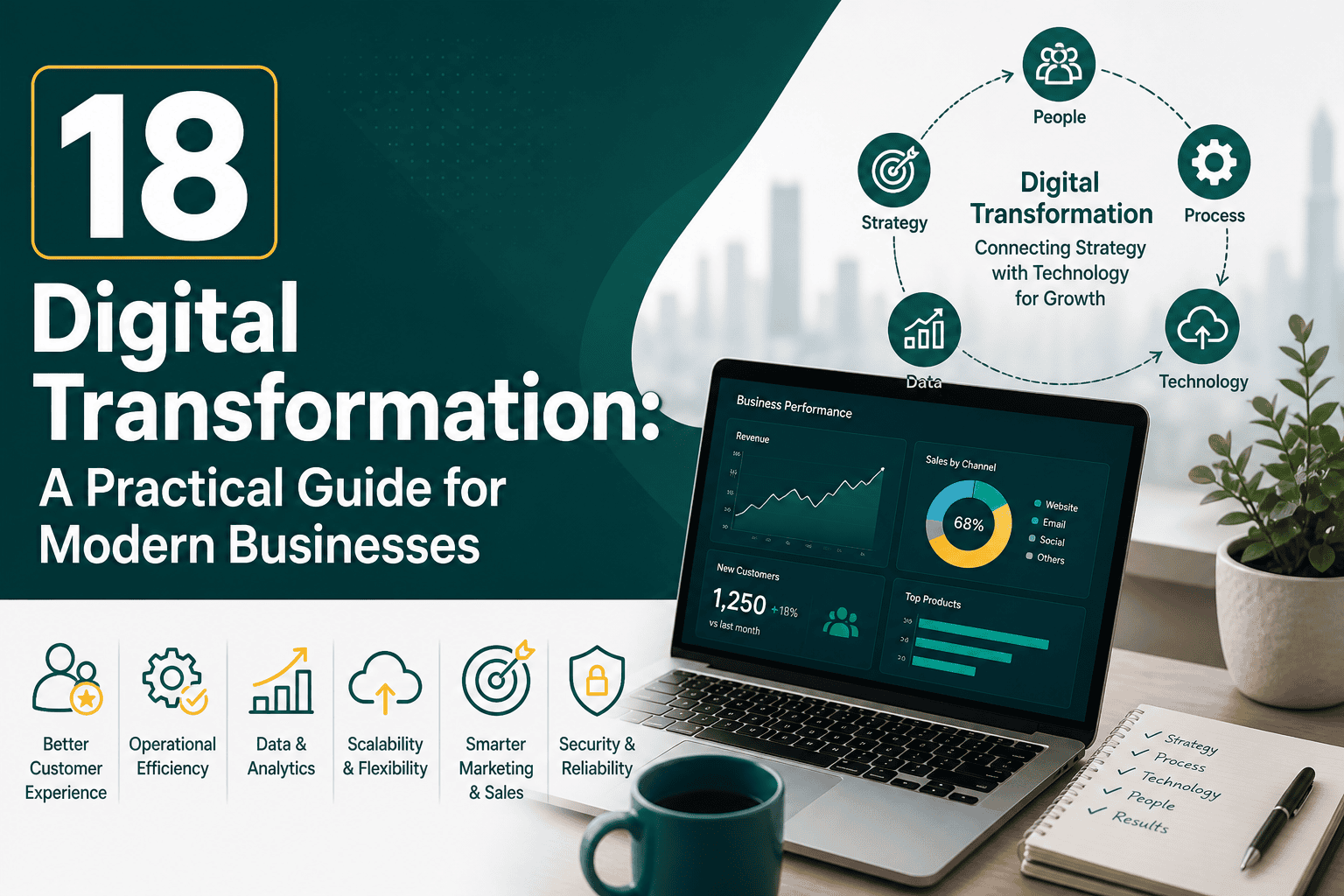
Digital transformation is the process of using technology, data, automation, and better digital systems to improve how a business operates, serves customers, makes decisions, and grows. It is not simply about buying new software or moving from paper to cloud tools. A successful digital transformation connects business goals with the right processes, platforms, people, and performance metrics.
For many companies, digital transformation affects almost every part of the organization: marketing, sales, customer service, operations, finance, ecommerce, reporting, and internal collaboration. When done well, it can reduce manual work, improve customer experience, increase visibility into performance, and create a more scalable business model.
However, digital transformation can also fail when it is treated as a technology project only. The real goal is business improvement. Technology is the enabler, but strategy, leadership, adoption, and execution determine the outcome.
Digital transformation means improving business processes, customer experiences, and decision-making through digital technologies. This can include websites, CRM systems, ecommerce platforms, marketing automation, analytics, cloud software, artificial intelligence, workflow automation, integrations, and data platforms.
At a basic level, digital transformation helps a business move from disconnected, manual, or outdated systems to more connected, efficient, and measurable ways of working. For example, instead of handling leads through spreadsheets and email threads, a business may use a CRM, automated follow-ups, lead scoring, reporting dashboards, and integrated marketing tools.
Digital transformation can include small improvements, such as automating appointment reminders, or large initiatives, such as replacing legacy systems, launching an ecommerce channel, building a customer portal, or integrating multiple departments around one shared data model.
Customer expectations have changed. People expect fast websites, simple checkout experiences, personalized communication, real-time updates, and consistent service across channels. Businesses that rely on slow, manual, or fragmented systems often struggle to meet these expectations.
Digital transformation matters because it helps companies become more responsive, efficient, and competitive. It allows teams to access better data, serve customers faster, reduce operational friction, and adapt more easily when the market changes.
It also gives leadership clearer visibility. Instead of guessing what is happening across sales, marketing, service, and operations, decision-makers can use dashboards, analytics, and connected systems to understand performance in real time.
These terms are often used interchangeably, but they mean different things.
Digitization is the process of converting physical or analog information into digital format. For example, scanning paper documents, converting printed forms into PDFs, or storing files in the cloud are examples of digitization.
Digitalization means using digital tools to improve an existing process. For example, replacing manual invoice approvals with an online approval workflow is digitalization.
Digital transformation is broader. It rethinks how the business operates, competes, and delivers value using digital capabilities. It may involve changing business models, customer journeys, team workflows, technology architecture, and decision-making processes.
Customer experience is one of the most important drivers of digital transformation. Businesses use digital tools to make it easier for customers to discover products, ask questions, make purchases, receive support, and stay engaged after the sale.
This may include improving website speed, adding live chat, building self-service portals, personalizing emails, simplifying checkout, or connecting customer support with CRM data.
Many businesses still depend on manual tasks, duplicate data entry, disconnected spreadsheets, and approval bottlenecks. Digital transformation improves these processes through automation, workflow tools, integrations, and standardized systems.
Examples include automated lead routing, digital onboarding, inventory synchronization, online document approvals, billing automation, and customer service ticket workflows.
Data is central to digital transformation. When information is scattered across different platforms, teams struggle to get a clear picture of performance. A good transformation strategy connects data sources and creates reliable reporting.
This allows businesses to measure marketing ROI, sales pipeline health, customer lifetime value, service response time, inventory trends, website performance, and operational efficiency.
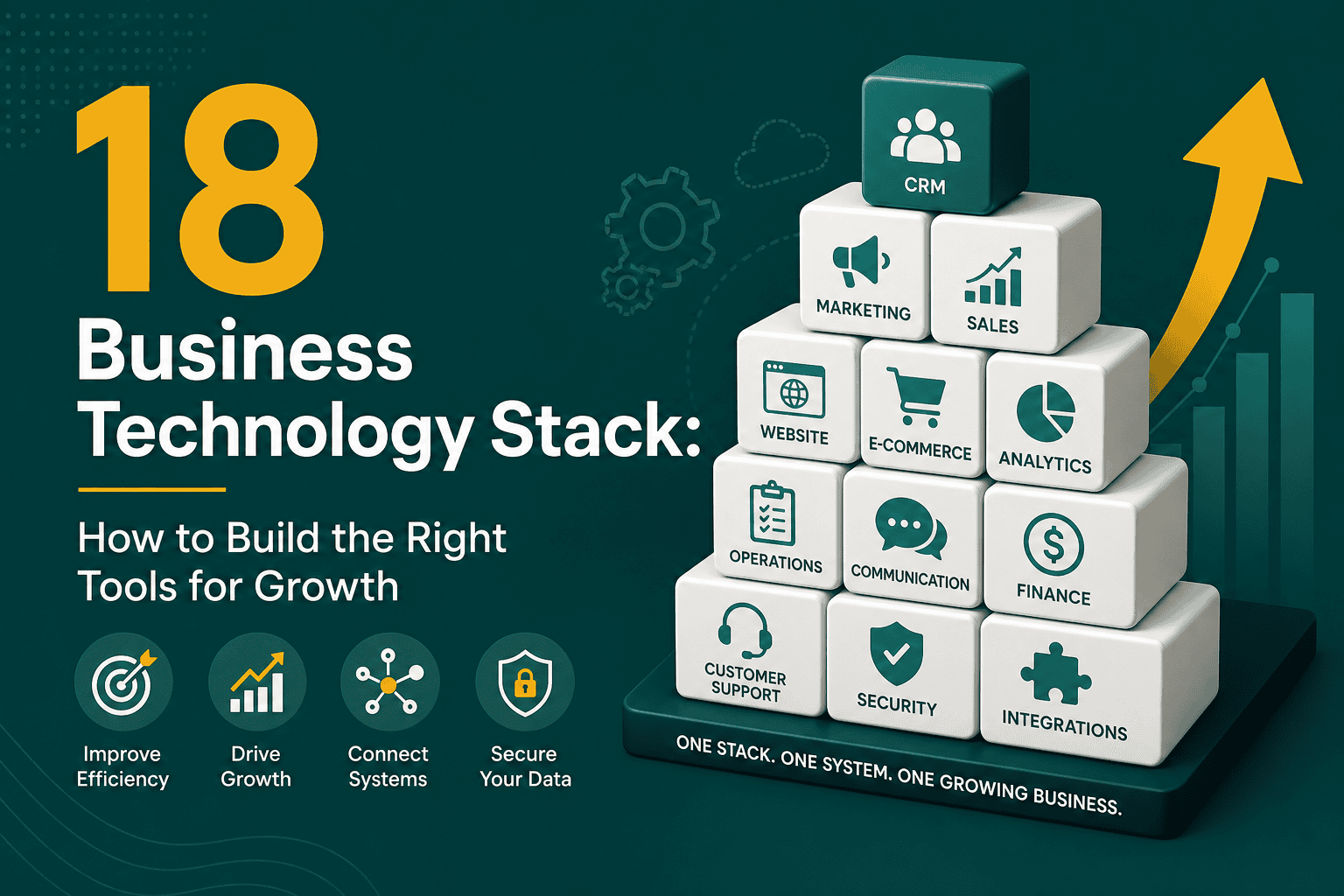
Your technology stack is the collection of tools your business uses to operate. This may include your website platform, CRM, ecommerce system, analytics tools, email marketing platform, payment systems, accounting software, project management tools, and integrations.
A successful digital transformation requires choosing tools that work together rather than creating more disconnected systems. If you are planning your technology foundation, a practical guide to building a business technology stack for growth can help you understand how different platforms fit together.
Digital transformation often changes how businesses attract and convert customers. Instead of relying only on offline referrals or manual sales follow-up, companies can use SEO, paid advertising, email automation, CRM workflows, retargeting, landing pages, and performance tracking.
To make these efforts effective, they need to be guided by a clear plan. A strong digital marketing strategy connects audience research, channels, messaging, campaigns, analytics, and business goals into one measurable growth system.
A CRM system is often a key part of digital transformation because it centralizes customer, lead, account, opportunity, and service information. Instead of customer data being spread across inboxes, spreadsheets, and disconnected tools, a CRM gives teams a shared view of relationships and activity.
For larger or more complex organizations, integration becomes especially important. A detailed Salesforce integration guide can help teams understand how CRM systems connect with websites, marketing platforms, ecommerce tools, accounting systems, and other business applications.
For product-based businesses, digital transformation may involve launching or improving ecommerce operations. This includes online product catalogs, payment processing, shipping rules, tax setup, inventory management, customer accounts, abandoned cart emails, analytics, and security.
Businesses using WordPress and WooCommerce should think beyond simply installing a store plugin. A complete WooCommerce store checklist can help ecommerce teams plan launch requirements, performance improvements, security, analytics, and post-launch optimization.
Your website is often the center of your digital presence. It supports credibility, lead generation, customer education, ecommerce, recruitment, support, and brand positioning. A poor website can weaken digital transformation efforts because users expect fast, clear, mobile-friendly, and reliable online experiences.
Choosing the right platform is an important decision. If your business is still evaluating website options, comparing WordPress vs Wix for your business can help clarify differences in flexibility, control, scalability, cost, and long-term growth potential.
Digital transformation does not look the same for every business. The right approach depends on industry, size, customer expectations, operational complexity, and growth goals.
A retail business may transform by launching ecommerce, connecting inventory between physical and online stores, using email marketing for repeat purchases, adding customer loyalty software, and analyzing buying behavior.
A professional services company may use digital forms, automated appointment scheduling, CRM-based lead tracking, proposal automation, project management tools, and client portals to improve efficiency and client communication.
A B2B company may implement a CRM, integrate marketing automation, improve lead scoring, build reporting dashboards, automate sales follow-up, and connect quoting or billing systems.
A clinic may use online booking, patient reminders, secure digital records, automated intake forms, dashboards, and digital communication channels to improve patient experience and reduce administrative workload.
A manufacturing business may use inventory systems, ERP software, supplier portals, production dashboards, predictive maintenance, and workflow automation to improve operational visibility and reduce delays.
A digital transformation strategy should be practical, measurable, and aligned with business goals. It should not start with software selection. It should start with problems, opportunities, and desired outcomes.
Start by identifying what the business wants to improve. Common goals include increasing revenue, reducing operational costs, improving customer retention, shortening sales cycles, improving reporting accuracy, or expanding into online channels.
Clear goals prevent technology decisions from becoming random. Every tool, workflow, and investment should support a measurable business objective.
Document how work currently gets done. Look for bottlenecks, duplicated tasks, manual approvals, disconnected data, slow customer response times, and systems that do not communicate with each other.
This process audit helps reveal where digital improvements will have the greatest impact.
Understand how customers discover, evaluate, buy, receive support, and return to your business. Identify friction points such as slow response times, confusing website pages, weak follow-up, poor onboarding, or lack of self-service options.
Digital transformation should make the customer journey easier, faster, and more consistent.
List every platform your business currently uses. Include websites, CRM systems, email platforms, accounting tools, reporting dashboards, project management software, payment systems, file storage, communication tools, and custom applications.
Then evaluate whether these tools are still useful, secure, integrated, scalable, and cost-effective.
Not every transformation project should happen at once. Prioritize initiatives based on business impact, urgency, complexity, cost, and dependency. Quick wins can build momentum, while larger initiatives require careful planning.
Data quality and integration are often the difference between success and frustration. Before implementing new systems, define what data needs to move, where it should live, who owns it, and how it will be maintained.
Even the best technology can fail if teams do not adopt it. Digital transformation requires communication, training, leadership support, documentation, and feedback loops. Employees need to understand why change is happening and how it helps them work better.
Set key performance indicators before launching transformation initiatives. Examples include conversion rate, response time, customer satisfaction, manual hours saved, sales cycle length, revenue per customer, website speed, lead quality, and operational cost reduction.
Many businesses buy tools before defining goals. This often leads to wasted budget, overlapping platforms, low adoption, and disappointing results. Strategy should come before technology selection.
When platforms do not connect, teams spend time copying data manually or working with incomplete information. Integration planning is essential for scalable transformation.
Duplicate records, inconsistent naming, missing fields, and outdated customer information can reduce trust in reports and automation. Clean data is a foundation for effective digital operations.
Employees may resist new tools if they feel the change is unnecessary, confusing, or imposed without support. Training and communication are critical.
Digital transformation often requires process changes, migration, testing, documentation, and ongoing optimization. Businesses should plan realistic timelines and budgets.
As businesses use more digital tools, they must pay more attention to access control, data protection, backups, secure configurations, and compliance requirements.
The technologies used in digital transformation vary by business, but common categories include:
A roadmap helps turn strategy into action. It provides a phased plan for implementing improvements without overwhelming the business.
Digital transformation should produce measurable improvements. The right metrics depend on the goals of the initiative, but common indicators include:
The most important measurement principle is to connect technology improvements to business outcomes. A new platform is only valuable if it helps the business work better, serve customers better, or grow more efficiently.
No. Digital transformation is important for businesses of all sizes. Small businesses may not need enterprise-scale systems, but they still benefit from better websites, online payments, CRM tools, marketing automation, analytics, cloud accounting, and streamlined workflows.
In fact, smaller companies can often transform faster because they have fewer legacy systems and shorter decision-making cycles. The key is choosing practical improvements that match the company’s size, budget, and goals.
Leadership is critical because digital transformation changes how people work. Leaders must set direction, prioritize initiatives, allocate resources, remove obstacles, and communicate why transformation matters.
Without leadership support, digital projects often become isolated efforts within departments. With strong leadership, digital transformation becomes a company-wide growth and improvement strategy.
Digital transformation is not a one-time project. It is an ongoing process of improving how a business uses technology, data, systems, and workflows to create better outcomes. The most successful companies do not adopt technology for its own sake. They use it to solve real problems, improve customer experience, increase efficiency, and support sustainable growth.
Whether your business is improving its website, implementing a CRM, launching ecommerce, automating workflows, integrating systems, or building better reporting, the same principle applies: start with strategy, focus on measurable value, and build systems that can grow with the business.