November 5, 2026
WooCommerce Shipping Setup: Complete Guide for 2026
WooCommerce Shipping Setup: Complete Guide for Online ...
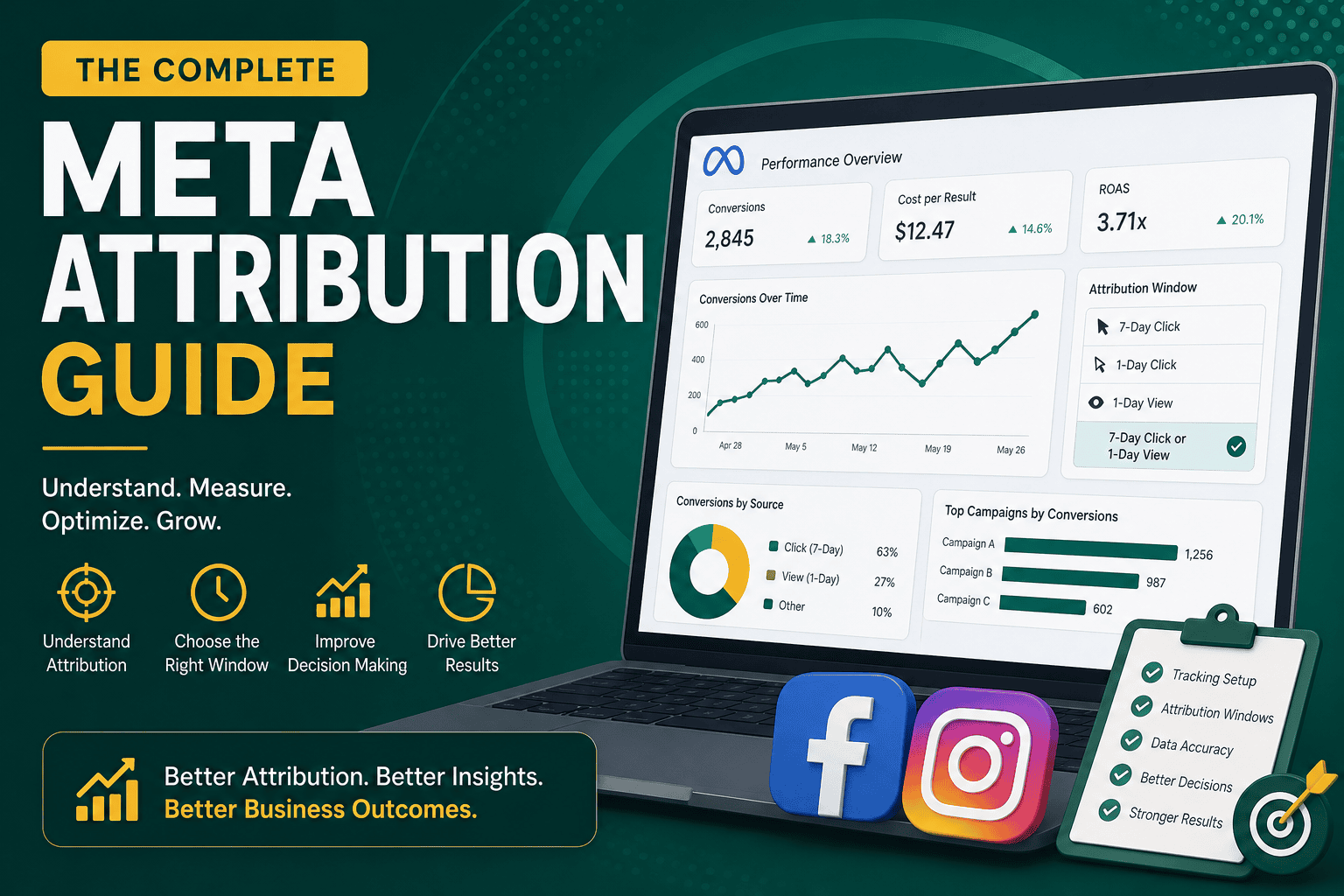
This meta attribution guide explains how attribution works in Meta ads, why it matters, which settings affect your results, and how to use attribution data to make better decisions across Facebook and Instagram campaigns. If you advertise on Meta, attribution helps answer a simple but important question: which ads, audiences, creatives, and campaigns influenced a conversion?
Without understanding attribution, it is easy to misread campaign performance. A campaign may appear profitable because Meta reports many conversions, but some of those conversions may have happened after several other touchpoints. Another campaign may seem weak because it drives early-stage interest rather than immediate purchases or leads. Attribution does not give a perfect view of reality, but it gives advertisers a structured way to connect ad interactions with business outcomes.
Meta attribution is especially important because modern customer journeys are rarely linear. A person may see a Facebook ad, visit your website, leave, watch an Instagram Reel later, search your brand on Google, return through email, and then submit a form. Attribution settings determine how Meta gives credit to ads within that journey.
Meta attribution is the process of assigning credit to Facebook and Instagram ads when someone takes a valuable action after seeing or engaging with an ad. These actions can include purchases, leads, add-to-cart events, content views, phone clicks, app installs, appointment bookings, subscriptions, or other conversions that matter to your business.
For example, if someone clicks your Instagram ad today and buys from your website tomorrow, Meta may attribute that purchase to the ad, depending on your attribution setting. If someone only views your Facebook ad and purchases later without clicking, Meta may still give credit if view-through attribution is included.
Attribution helps advertisers understand which campaigns are contributing to results. It affects reporting, optimization, budget decisions, creative testing, and how Meta’s delivery system learns from conversion data.
Meta attribution matters because it influences how you interpret performance. If your attribution settings are too broad, you may overestimate the impact of your campaigns. If they are too narrow, you may undervalue ads that assist conversions but do not always generate immediate action.
Good attribution analysis can help you:
Attribution is not just a reporting setting. It shapes how you measure success and how you optimize your advertising strategy. For broader campaign measurement practices, this guide pairs well with Meta ads reporting, which explains how to analyze campaign data beyond surface-level metrics.
Meta attribution works by tracking user interactions with ads and connecting those interactions to conversion events. This typically depends on several data sources, including the Meta Pixel, Conversions API, app events, offline events, lead forms, and in-platform engagement signals.
When a person sees or clicks an ad, Meta records that interaction. If that person later completes a tracked conversion within the selected attribution window, Meta may assign credit to the ad. The attribution window defines how long after an ad interaction Meta can count a conversion.
For example, if your attribution window is set to 7-day click and 1-day view, Meta can count conversions that happen within seven days after someone clicks an ad or within one day after someone views an ad without clicking.
An attribution window is the time period during which Meta can assign a conversion to an ad interaction. Meta commonly uses click-through and view-through windows.
Click-through attribution gives credit when someone clicks an ad and converts within the selected time period. This is usually considered a stronger signal than a view because the person actively engaged with the ad.
Common click attribution windows include:
A 1-day click window is stricter. It only counts conversions that happen within one day after the ad click. A 7-day click window is broader and includes conversions that happen up to seven days after the click.
View-through attribution gives credit when someone sees an ad but does not click, then converts within the selected view window. This can be useful for understanding awareness and influence, but it should be interpreted carefully because the person may have converted due to another channel or existing brand interest.
A common view attribution window is:
View-through conversions can be valuable, especially for brands with strong visual ads, longer consideration cycles, or campaigns designed to influence demand. However, if you rely too heavily on view-through data, performance may look stronger than the actual incremental impact of your ads.
Meta attribution settings can vary depending on campaign objective, optimization event, and reporting configuration. Some of the most common attribution settings include:
The best attribution window depends on your business model, sales cycle, price point, customer behavior, and campaign objective. A low-cost impulse purchase may need a shorter attribution window. A high-ticket B2B service may require a longer evaluation period and may not be fully captured by short attribution windows.
One common source of confusion is the difference between attribution settings used for optimization and attribution columns used for reporting. The attribution setting tells Meta what conversion window to optimize toward when delivering your ads. Reporting attribution shows how conversions are counted in Ads Manager based on selected attribution views.
For example, a campaign may optimize for conversions using a 7-day click or 1-day view setting, while you may review performance in reporting columns using 1-day click only. This can lead to different numbers depending on how you are viewing the data.
When analyzing performance, always confirm which attribution view you are using. Otherwise, you may compare campaigns using inconsistent measurement logic.
Accurate attribution depends on accurate event tracking. If your conversion events are missing, duplicated, delayed, or configured incorrectly, Meta attribution data will be unreliable.
The Meta Pixel tracks browser-side events on your website, while the Conversions API sends server-side events directly to Meta. Using both together can improve measurement reliability, especially as browser restrictions, cookie limitations, and privacy changes reduce the accuracy of traditional tracking.
If your campaigns depend on website conversions, proper event setup is essential. For a deeper explanation of Pixel, Conversions API, and event quality, review this Meta event tracking guide.
To improve attribution quality, make sure you have:
Attribution problems are often tracking problems. Before making major campaign decisions, verify that your events are firing correctly.
Not every Meta campaign should be judged the same way. Attribution should be interpreted based on campaign intent.
Prospecting campaigns target people who may not already know your business. These campaigns often introduce your offer to new audiences. Because users may need multiple interactions before converting, prospecting campaigns can look weaker under very short attribution windows.
When analyzing prospecting campaigns, consider:
Remarketing campaigns target people who already interacted with your business, such as website visitors, cart abandoners, social engagers, or customer list segments. These campaigns often produce stronger reported attribution because the audience is already warmer.
However, remarketing attribution should be interpreted carefully. Some users may have converted anyway without seeing another ad. To improve your strategy, use remarketing with well-defined audiences, relevant messaging, frequency control, and meaningful exclusions. This remarketing guide explains how to structure campaigns for people who have already shown interest.
Catalog campaigns often use product-level behavior to show relevant items to users. Attribution can be strong because ads are personalized based on browsing or shopping behavior. If someone views a product and later sees a dynamic ad for that item, Meta may attribute the eventual purchase to the catalog campaign.
For ecommerce businesses, attribution quality depends heavily on product feed health, event tracking, and catalog setup. A clean catalog helps Meta connect user actions with the right products and ads. If you sell products through Facebook or Instagram, review this Meta catalog setup guide to ensure your product data supports better campaign performance.
Attribution affects how you decide where to spend more or less. If you only look at Meta-reported purchases or leads, you may overinvest in campaigns that are good at claiming credit but not necessarily good at creating new demand.
For example, a small remarketing campaign may show a very high return on ad spend because it targets people who already visited your website. A broader prospecting campaign may show a lower return but may be responsible for bringing new people into the funnel. If you cut prospecting and only fund remarketing, your remarketing audience may eventually shrink.
Good budget decisions consider both platform attribution and business-level outcomes, such as:
Meta attribution should guide decisions, not replace business judgment.
Meta ads often influence multiple stages of the customer journey. Some campaigns create awareness, some generate consideration, and others push users toward conversion. Attribution windows can help measure direct response, but they do not always capture the full journey.
For example, a user may first discover your brand through a video ad, later visit your website from a carousel ad, then convert after receiving an email. Depending on tracking and attribution rules, Meta may receive partial or full credit, or it may miss the conversion entirely.
This is why attribution should be connected to funnel strategy. If you want to understand how ads support awareness, consideration, and conversion, it helps to map your campaigns to a clear customer journey. This article on the marketing funnel explains how different stages work together to turn strangers into customers.
Meta attribution is useful, but it is not a complete source of truth. It is a platform-specific view of performance. Meta may count conversions differently from Google Analytics, Shopify, WooCommerce, your CRM, or offline sales reports.
Meta, Google Ads, analytics tools, and CRMs often use different attribution models and windows. If Meta reports 100 conversions and another tool reports 60, that does not automatically mean one is broken. They may simply assign credit differently.
Some advertisers ignore all view-through conversions, while others trust them too much. The best approach is balanced. View-through conversions can show ad influence, but they should be evaluated alongside click-based conversions and overall business performance.
A remarketing campaign and a cold prospecting campaign should not always be judged by the same standards. Campaign objective, audience temperature, and buying cycle all affect how attribution should be interpreted.
If your attribution window is seven days, conversions may continue appearing several days after the click. Judging performance after only one day may lead to premature decisions.
Bad tracking leads to bad attribution. Duplicate purchase events, missing lead events, incorrect thank-you page tracking, or poor Conversions API setup can distort campaign performance.
To analyze Meta attribution data properly, look beyond one metric. Cost per result and return on ad spend are important, but they should be reviewed in context.
For lead generation campaigns, attribution should not stop at the lead form submission. A campaign that produces cheap leads may not produce qualified opportunities or closed sales. Meta may correctly attribute the lead, but the business value of that lead may be low.
Lead generation advertisers should connect Meta data with CRM or sales data whenever possible. Important downstream metrics include:
If your business uses a CRM, sending offline conversion data back to Meta can also help improve optimization quality. This allows Meta to learn from leads that actually became qualified prospects or customers, not just from form submissions.
For ecommerce, Meta attribution usually focuses on purchases, revenue, return on ad spend, average order value, and cost per purchase. However, ecommerce attribution can become complicated because customers may interact with multiple channels before buying.
Important ecommerce attribution considerations include:
A strong ecommerce attribution process compares Meta Ads Manager data with ecommerce platform revenue and overall marketing performance. If Meta-reported ROAS rises but total store revenue does not, attribution may be overstating incremental impact.
Privacy changes have made attribution more complex. Browser restrictions, cookie limitations, iOS privacy controls, consent requirements, and user tracking preferences can reduce the amount of observable data available to ad platforms.
As a result, Meta may use modeled conversions, aggregated reporting, and server-side signals to estimate performance. This does not make attribution useless, but it means advertisers should expect some differences between platforms.
To improve measurement in a privacy-conscious environment, advertisers should:
When comparing campaigns, use the same attribution view whenever possible. If one campaign is reviewed using 7-day click and another using 1-day click, the comparison may be misleading.
Keep prospecting and remarketing performance separate in your analysis. Remarketing usually receives more direct attribution because the audience is warmer, while prospecting often plays a demand-generation role.
Before increasing budget, confirm that your conversion events are accurate. Scaling a campaign with broken attribution can lead to poor decisions and wasted spend.
Do not rely only on Ads Manager. Compare Meta-reported results with CRM data, ecommerce sales, call tracking, appointment data, and total revenue.
Awareness, consideration, and conversion campaigns should have different success metrics. Not every campaign should be expected to generate immediate purchases or leads.
Retargeting campaigns often look highly profitable, but some users may have converted without seeing another ad. Use exclusions, frequency monitoring, and incrementality thinking when analyzing warm audiences.
Allow enough time for delayed conversions to appear. If your average buying cycle is several days, do not judge performance based only on same-day results.
Use this checklist to review your attribution setup and reporting process:
Meta attribution helps advertisers understand how Facebook and Instagram ads contribute to conversions, but it should be interpreted carefully. Attribution windows, tracking quality, campaign type, audience temperature, privacy changes, and customer journey complexity all affect what you see in Ads Manager.
The best approach is to use Meta attribution as one part of a broader measurement system. Combine it with clean event tracking, thoughtful reporting, CRM or ecommerce data, and an understanding of your marketing funnel. When used correctly, attribution can help you make smarter budget decisions, improve campaign performance, and build a more reliable advertising strategy.