August 25, 2026
Salesforce CRM Best Practices: 20 Tips for Better Results
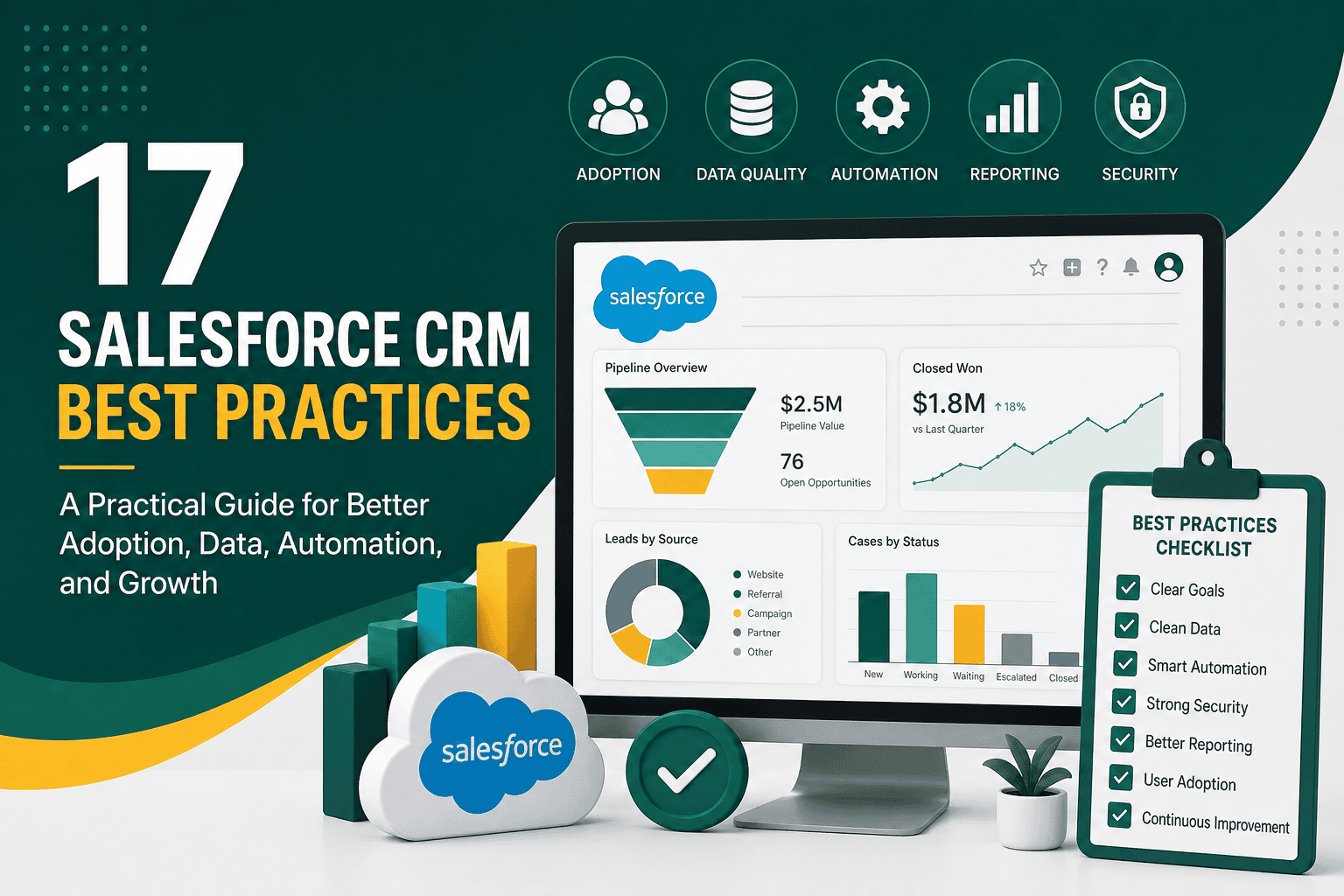
Salesforce CRM Best Practices: A Practical Guide for B...

Choosing a web developer is one of the most important decisions you can make when building, redesigning, or improving your business website. The right developer can help you create a fast, secure, search-friendly, easy-to-manage website that supports leads, sales, branding, and long-term growth. The wrong developer can leave you with slow pages, poor user experience, technical debt, weak SEO foundations, security risks, and expensive fixes later.
A professional website is not just a digital brochure. It is often the first place potential customers evaluate your business, compare your offer, submit inquiries, book appointments, buy products, or decide whether they trust you. That means your web developer should understand more than design and code. They should also understand performance, mobile experience, conversion strategy, analytics, content structure, SEO basics, security, hosting, and maintainability.
This guide explains how to choose a web developer, what skills to look for, what questions to ask, how to compare proposals, and how to avoid common hiring mistakes.
Your website affects almost every part of your digital presence. It influences how people find you, how quickly they understand your services, how easy it is to contact you, and how confident they feel doing business with you. A developer who only focuses on visual design may create something attractive but difficult to update, slow to load, or poorly structured for search engines.
A strong web developer helps you make smart decisions about:
If you are planning a redesign rather than a brand-new site, the stakes are even higher because an incorrect migration can damage search visibility, break links, remove valuable content, or disrupt tracking. Before starting that type of project, it is worth reviewing a structured website redesign SEO checklist and step-by-step plan so you know what should be protected during development.
Before choosing a web developer, clarify what you actually need the website to accomplish. Many projects fail because the business hires someone before defining goals, requirements, audience needs, and success metrics.
Ask yourself:
The clearer your goals are, the easier it is to find the right developer. A freelancer may be perfect for a small marketing website, while a larger agency may be better for a complex ecommerce or integration-heavy project.
Not every web developer offers the same skills. Some focus on design, some on front-end development, some on back-end systems, and others on full website strategy. Understanding the differences helps you choose the right fit.
A front-end developer builds the parts of the website visitors see and interact with. This includes layouts, navigation menus, buttons, forms, responsive behavior, animations, and styling. They usually work with HTML, CSS, JavaScript, and front-end frameworks or page builders.
A good front-end developer should care about usability, accessibility, browser compatibility, mobile responsiveness, performance, and clean code.
A back-end developer works on the server-side logic, databases, integrations, custom functionality, user accounts, APIs, and system architecture. You may need a back-end developer if your website requires custom portals, advanced search, web applications, complex forms, automation, or integrations with external systems.
A full-stack developer can work on both front-end and back-end development. This can be useful for small to mid-sized projects where one person or a small team needs to manage the full build.
A WordPress developer specializes in building, customizing, optimizing, and maintaining WordPress websites. This may include theme development, plugin setup, custom post types, WooCommerce stores, performance optimization, and content management workflows.
If you are still comparing platforms, explore the differences between WordPress and Wix for business websites. Choosing the right platform before hiring a developer can prevent expensive rebuilds later.
A web designer focuses on the visual and user experience side of the website: layouts, colors, typography, branding, page hierarchy, and user journeys. A web developer turns those designs into a working site. Some professionals do both, but many specialize.
For high-quality results, design and development should work together. A beautiful design that is hard to build, slow to load, or confusing to manage can create problems. A technically functional website with weak design can also fail to convert visitors.
When choosing a web developer, do not evaluate technical skills alone. A reliable developer should combine technical ability with communication, planning, problem-solving, and business awareness.
Your developer should have experience with the platform you plan to use. For example, a WordPress developer should understand themes, plugins, custom fields, security, backups, staging environments, SEO plugins, caching, and updates. An ecommerce developer should understand product management, checkout flow, payment gateways, shipping rules, tax settings, and customer data protection.
Most users browse on mobile devices, so your website must work well across screen sizes. A good developer should test layouts on mobile, tablet, laptop, and desktop screens rather than simply shrinking a desktop design.
Your developer does not need to be a full SEO strategist, but they should understand technical SEO fundamentals. These include clean URL structures, heading hierarchy, metadata support, indexability, schema readiness, image alt text, redirects, sitemap configuration, and page performance.
Website speed affects user experience, conversion rates, and search performance. A skilled developer should understand caching, image optimization, lightweight code, font loading, script management, hosting quality, and Core Web Vitals.
If performance is a priority, use a practical Core Web Vitals guide for improving LCP, INP, and CLS to understand the metrics your developer should be able to discuss and optimize.
Your website should be protected against common risks such as outdated plugins, weak passwords, insecure forms, missing SSL, poor hosting, and vulnerable custom code. A responsible developer should recommend security best practices, backups, update procedures, and access controls.
Many website projects fail because of poor communication, not poor coding. Look for a developer who explains decisions clearly, documents requirements, sets realistic timelines, asks good questions, and provides updates throughout the project.
A business website should guide visitors toward useful actions. Your developer should understand how to structure pages around calls to action, forms, trust signals, navigation clarity, content hierarchy, and friction reduction.
A portfolio helps you evaluate a developer’s style, experience, and quality of work. Do not only look at screenshots. Visit the live websites if possible and test them yourself.
When reviewing portfolio examples, check:
Also ask what part of each project the developer handled. Some developers show projects where they only made small updates, while others led strategy, design, development, optimization, and launch.
The questions you ask before hiring can reveal how the developer thinks, communicates, and manages risk.
It is tempting to choose the cheapest proposal, but web development pricing can vary because developers include different levels of planning, customization, testing, SEO setup, content support, performance work, and post-launch service.
When comparing proposals, look at:
A higher upfront cost may be worthwhile if it reduces future maintenance problems, improves performance, protects SEO, and gives your team a website they can actually use.
Hosting is one of the most overlooked parts of choosing a web developer. Even a well-built website can perform poorly on low-quality hosting. Your developer should be able to recommend hosting based on your platform, traffic, security needs, ecommerce requirements, and budget.
For WordPress websites, hosting affects speed, uptime, backups, staging, caching, SSL, server resources, and support quality. If you are unsure what matters, a detailed WordPress hosting guide for choosing reliable hosting can help you evaluate developer recommendations more confidently.
Your developer should also explain how they handle performance from the beginning of the project. Speed should not be treated as an afterthought once the site is already bloated with oversized images, unnecessary scripts, and poorly configured plugins.
A website is not finished forever once it launches. It needs updates, monitoring, backups, plugin maintenance, content changes, security checks, and occasional improvements. When choosing a web developer, ask whether they offer maintenance or whether you will need another provider after launch.
A good maintenance plan may include:
If your website uses WordPress, plugin choices matter because too many plugins or poorly built plugins can slow the site and increase security risks. Review the principles behind choosing the WordPress plugins you actually need before approving unnecessary features.
Some warning signs suggest a developer may not be the right fit for your project. One red flag does not always mean you should walk away, but several together should make you cautious.
Choosing a web developer also means deciding what type of working relationship fits your business.
A freelancer can be a great choice for small to mid-sized websites, landing pages, WordPress development, performance fixes, or ongoing technical support. Freelancers often have lower overhead than agencies and can offer more direct communication.
However, one person may have limited availability or may not cover every specialty, such as branding, copywriting, advanced SEO, analytics, or complex integrations.
An agency may be better for larger projects that require strategy, UX design, development, copywriting, SEO, paid media, analytics, and ongoing support. Agencies usually have a broader team, more formal processes, and more capacity.
The tradeoff is that agencies typically cost more, and communication may pass through account managers rather than directly through the person building the site.
An in-house developer may make sense if your website or web application is central to daily operations and requires constant development. This is common for SaaS companies, marketplaces, large ecommerce brands, and businesses with complex internal systems.
For most small businesses, hiring a web developer externally is more cost-effective than employing a full-time developer.
A written agreement protects both you and the developer. It should clearly define expectations before work begins.
A good web development contract should include:
Never rely only on verbal promises. If something is important, make sure it is written in the proposal or contract.
Web developer costs vary widely based on project complexity, location, experience, platform, design requirements, custom functionality, integrations, and ongoing support.
Typical factors that affect cost include:
A simple brochure website may cost far less than a custom ecommerce store or web application. Instead of asking only “How much does a website cost?”, ask “What business problem is this website solving, and what level of quality do we need to solve it properly?”
You do not need to have every detail finalized before speaking with a developer, but preparation will help you get more accurate proposals.
Prepare the following if possible:
The more context you provide, the easier it is for the developer to recommend the right approach.
Use this checklist to compare candidates before making your final decision.
When choosing a web developer, avoid these common mistakes:
Choosing a web developer is not just about finding someone who can build a website. It is about finding a partner who understands your goals, communicates clearly, makes smart technical decisions, and builds a website that supports your business over time.
The best developer for your project will depend on your platform, budget, timeline, technical requirements, and growth plans. Take time to review portfolios, ask detailed questions, compare proposals carefully, and confirm what is included before signing a contract.
A well-built website should be fast, secure, mobile-friendly, easy to update, structured for search engines, and designed around real customer actions. When you choose a developer with those priorities in mind, your website becomes more than an online presence. It becomes a stronger foundation for marketing, sales, customer trust, and long-term business growth.